Some Nifty Cookbooks Worth Your Time

Tuesday, May 27, 2014


So I feel the need to share some cookbooks with you guys. A heads-up: I received copies of these books free of charge. However, I'm only writing reviews of them because I actually enjoy them and gleefully stained the heck out of many of their pages.

I'm not being paid to write these. I'm not so base as to do that.

These books rock because the authors put a lot of time and effort into developing quality books with a engaging narratives, capturing photography, and unique recipes. They're worth having for the stories and foods they share.

So let's move on...

Back to Basics. Making crepes.

Tuesday, January 21, 2014

-Pastry perfection.-

I tend to be wary of crepes. I love them, but I just happen to have a habit of burning them as if I were knitting tissue paper over an open flame. Dodgy business these crepes.

Admittedly, at times I have a tendency to simply skirt away from certain challenges as if stealing away from disapproving parents in the middle of the night, not bothering to even leave a note. Most of my life I'm happy to meet a challenge. Yet there are always those lesser confrontations; ones where neither your future nor your reputation on the line. Some of them don't even bother to address you, instead happy to lay a deck chair out in the middle of the road and wait for you to drive around them simply because, let's face it, it's easier for both of you that way.

JunkLovin': Book Review of "Classic Snacks Made From Scratch"

Tuesday, March 5, 2013

-Heart stopping goodness.-

My original major in college before I switched to English and Sociology was actually Genetics, and one of the perks to this major was having access to a well-stocked chemistry lab.

One Spring we came across a website that detailed the resilience of peeps when placed in extreme conditions. When frozen in liquid nitrogen they would shatter, and when placed in a vacuum they would puff up before collapsing in on themselves and looking like a neon raisin. The most shocking was the acid test where the peeps - horrifyingly - survived.

We decided to try this out ourselves. We filled a glass beaker with sulfuric acid, which when measured at the same molarity (a measure of concentration of a substance) is about twice as acidic as hydrochloric acid (the acid found in your stomach). We dropped a Peep in and... nothing happened.

At all.

Halfway There: Lemon, Yogurt, and Almond Custard Pots

Tuesday, November 6, 2012

-I AM so lucky!-

Done, done, done.

So done.

A finished draft of the book with all its pictures, appendices, intros, and recipes tested by over 85 people has been turned into our editor at Little, Brown & Company. All 409 pages of it.

Four. Hundred. And. Nine. Pages.

So excuse me if my posting has been a little, short as of late. It's just, you know, 409 pages. The last two weeks I have done nothing but read-tinker-edit-futz-delete-edit-again-add-change-and-putz-with those 409 pages. I can recite whole recipes and headnotes to you from memory.

If we were to take an MRI of my brain all that grey matter would somehow resemble elbow macaroni and globs of melted cheese.

*oof*

La Tartine Gourmande Cookbook Review

Tuesday, March 6, 2012

-Pictured: Not macaroni and cheese.-

So this week has been kind of a string of failures in regards to The Cookbook. I feel like I’ve been falling down a flight of stairs, only they’re Escher’s stairs so I just keep tumbling down, up, and sideways and I’m not exactly sure when I’ll finally, bloodily land into a broken heap at the bottom. It’s just that every. Single. RECIPE has sort of collapsed in on itself or worse. No explosions as of yet (unless you count emotional ones), but I have no doubt that I and my 1973 gas range will sort that out before the month is out.

Allow me chronicle this with you.

Failure 1: Paneer Korma
Let me prep you first by saying this was part five (billion?) in a series of me trying to make an authentic Indian dish. I had been talking to friends Monica Bhide and Maneet, the woman who owns the Indian grocery store around the corner from my rental, and working through a number of dishes that could utilize homemade paneer into something with truly authentic Indian flavors.

Time after time the flavors seemed to be too weak or somewhat offputting. I would increase the amount of ginger, garlic, turmeric, everything. I would switch that out with this, then back again. After so many failures with vermicelli, curries, and stir-fries I moved on to kormas.

Of course, I have no experience cooking Indian food so all of this was very much off the hip. Yet, at the same time, I followed recipes to the T from people who knew what they were doing and everything kept going awry for me. I’m not sure what it was but the universe had decided that I was banned from cooking Indian-style cuisine.

The korma would be an exercise in simplicity. Tomatoes, a heavy hand of spices, and cream cooked down into a thick sauce before veggies and paneer were added. The whole of it then served over pasta. Now, when I say heavy hand of spice I mean three cloves of garlic, and knob of ginger the size of a witch’s knuckle, coriander, cayenne, cumin, garam masala, and enough turmeric to dye a quilt all went into this sauce. Still, there was barely any flavor. And what there was just didn’t have the richness and depth of the kormas you eat at a hole in the wall Indian restaurant.

Same old problem.

Paneer, of all cheeses, is truly kicking my ass. I’m thinking of simply sautéing it with some spinach, ginger, garlic, and chili flakes and tossing it over vermicelli. Essentially palak paneer with a little liquid added to make it saucier.

-Cause we always love things saucy.-

Failure 2: Cocoa Cardona with Chocolate Pasta, Strawberries, Balsamic Reduction, and Black Pepper
Once in a while you stumble into a Black Hole of Flavor. One of those dishes where a bunch of strong willed ingredients converge and completely cancel each other out somehow. It's much like when two opposing frequencies collide and thus cease to exist. Everything in a recipe gets sucked into some sort of negative zone where taste and flavor are null and void.

In this dish all the above went into it. Strawberries were sautéed and then sauced with a reduced balsamic. Tossed with chocolate pasta, cheese, and black pepper it should have been black and red fireworks bombarding the eater. Rather there was no spark, not even a fizzle. It tasted like cardboard and a disappointing sense of lack akin to expecting a letter to arrive in the post and finding the box empty.

We’ve tried it numerous times. I've come to the conclusion that this dish is simply a hollow vessel of the parts that made it. A puppet without strings to animate it.

Sad. So sad.

For the Modern Woman of 1965

Sunday, December 27, 2009

"Here's how the woman in a hurry will be enabled to plan her time and food resources to meet her increasing tasks expected of her and still give herself and her family all the necessary variety and attractive service modern mealtime demands." -The Culinary Arts Institute Encyclopedic Cookbook (pg. 900)


Not so much a cookbook, but a resource guide for the modern American woman. One who is new to the kitchen and is suddenly faced with cooking for herself as a single career woman or, most likely as the book expects, a new wife and mother. Culinary Arts Institute Encyclopedic Cookbook by Ruth Berolzheimer is by and far one the pinnacle cookbooks of the 1960's and 70's.

Published in 1965, CAIEC was intended to be "familiar, friendly, and exhilarating" and "provide sound knowledge of what a homemaker needs for herself and her family." The cookbook covers everything; from menu planning, to packing school lunches, to tables settings, and even has charts on the cuts of veal and squirrel.

Oh yes, squirrel.

While chicken, beef and pork are covered at length you will find no end to the number of American sourced meats such as opossum and reindeer and how to prepare every single organ in each and every critter that runs on the American plains. Tongue and cabbage salad? Done. You want calf brain fritters? You got it. Spinach rolled sweetbread? Why not?!

The modern American woman, of course, is one who is at least fourth-generation American (not an immigrant), white (no, white immigrants don't count unless you're maybe English), and middle class. A new generation without servants to prepare their food, a critical aspect of the cookbook as if you look in cookbooks older than this servants are a topic that are usually addressed. However, once or twice the topic of "if you have a servant" is addressed in CAIEC and it provides useful tips of how to put them to work in assisting you for cooking for that night's stylish cocktail party.

This cookbook is a product of the times, as referenced by these notes and others indicators such as the prevalence of jelled salads and the reference to "mechanical refrigerators" and "the recent discovery of vitamins." Still, this book gives Joy of Cooking a run for its money and addresses things that the 1960 edition of Joy didn't such as shopping lists, addressing what foods are high in certain nutrients like phosphorous and copper (in case you need more phosphorous in your diet).

However, one of the best little discoveries in this book are my grandmother's notes. Recipes that have been tried and crossed out, or others that have been edited with substitutions. As Ojai Grandma was a world traveler she begins to edit the book to make dishes more exotic in a time when curry powder and pizza were new and radical foods. In fact, the addition of ingredients like soy sauce, bonito, and chipotle peppers are noted here and there. Where a modern woman in 1965 procures these at the time rare, if not wholly unknown, ingredients in the middle of rural and cutoff Ojai, California is beyond me, but she was a resourceful girl apparently.

This is particularly noteworthy as the book focuses solely on classic Americana cuisine. You won't find tacos, chop suey, lasagna, or coq au vin. While I didn't find the lack of Thai curries surprising the intentional choice to disregard classic European dishes, especially French, that American cooks looked up to as the definition of refined cuisine, a culinary God to which virgins should be sacrificed, is surprising. The book is intent of keeping things American with a few choice exceptions such as a basic consommé or sauerkraut. This means praline ice cream, salsify patties, jelled lime and avocado salad, and raised cornmeal griddlecakes.

After checking with mom if I could steal the book away from the dusty shelves in her library I now have the book at home with me and plan to start cooking from this and exploring some of the book's particular quirks and chapters on the blog.

This will be a little mini-series exploring what was expected of a modern homemaker in 1965. One that, hopefully, will result in some great recipes and some insight into the home cook of America's past.

Note: Click here to see the photos in an album rather than a slideshow.

Amaretti & Prunes (PLUS: A Cookbook Giveaway!)

Sunday, October 18, 2009

-A colorful and sweet risotto with a mellow wisp of parmesan and butter, and announced with a trumpeting blare of prunes and wine.-

"Okay, well right off the bat you don't want an Amarone. That'll set you back $70 on the low end and if you want to stay on budget we should find one wine for both dishes." The wine guy said this without looking at me as he searched through the racks of Italian labels in what seemed to be a futile attempt to help me. My wine knowledge isn't what one might even call mediocre, I have more know how in how to install a light fixture than knowing a rosey wine from a rosey nose. Thus, the task of meeting my seemingly impossible needs fell to him.

I was hell bent on making two dishes from my Pasta Sfoglia book, one being a gnocchi dish using the sweet potato gnocchi I made last weekend and the other being a risotto. Both dishes required prunes and amaretti, a dry Italian almond cookie. I figured this would be a great chance to try two different dishes.

However, each one also asked for a different, slightly expensive wine, one that asked for Amarone and the other a Marsala. After a bit of searching my wine guy was able to find something that kind of balanced the two though from what I understand I was basically asking for, "apples and oranges in one bottle."

-It was this one. It's a good thing you're reading this because I'm pretty sure I pronounce it so badly you'd go spontaneously deaf.-

With wine in hand I began my risotto experiment. I had never made risotto before and assumed it was just like making rice pudding. Furthermore, I had only ever tried onceone my life so I had no idea what a finished risotto really looked like. Luckily, the cookbook had pretty clear directions so as I sat and stirred and shook and mixed while I listened to Anthony Hopkins play the role of Titus on my crappy old television. Shakespeare and the smell of risotto cooking; I can't endorse this combo enough.

-Photographing something shiny and black like prunes is a total bitch. Just letting you know.-

Soon it was time to serve...

"You'll have to pardon me if the risotto is like glue. Eat it anyways and make me happy," I slid the bowls of risotto over to my guests. The risotto was striking in its hues of purple; lavender shaded rice with pitch-burgundy sauce which offset the tan crumbles of amartetti.

All my testers then looked at the food in front of them. Purple food - strikingly purple food - was not quite common for either of them. They lifted their forks, took a bite, mulled it over a bit, and then smiled and dove in for more. They weren't even faking. Go me.

The risotto was delicious, especially the sauce. (My God, the sauce!) When we had the leftover risotto again for dinner I made another batch of it and loosely swirled it in with the rice and crumbled more cookies over the top. My guests and I were in agreement that this was a better result though whether it was due to our collective sweet tooth or the fact that my risotto skills are negligible is undetermined (probably a little column A and a little column B).

The gnocchi dish was equally tasty as differing layers of sweet flavors really helped establish a choral counterpoint to the still savory gnocchi. However, it is my opinion that sweet potato gnocchi will taste perfect no matter what you do to them.

Overall, between all the gnocchi and risotto I'm totally digging the prune-amaretti combo and this cookbook (and I have yet to even try the pasta dishes). In fact I'm enjoying it so much that I'm giving away a copy of Pasta Sfoglia to one lucky reader. Even better, author Ron Suhanosky will personally be signing the copy for the winner! A big thanks to Ron, John Wiley & Sons publications, and a super big thanks to Megan Evans for helping me organize this little giveaway for you guys!

To enter just leave a comment about your favorite kind of pasta on this post before Friday the 23rd. On Friday, I'll announce the winner so be sure to check in and see if you've won. Please enter only once. All contestants must be in the continental United States. NOTE: This contest is closed.

-An awesome cookbook signed by Chef Ron Suhanosky. A perfect text for any pasta novice like myself.-

Risotto with Red Wine, Prunes, and Amaretti
Adapted from Pasta Sfoglia
Serve 4-6


2 tablespoons of oil (olive, safflower, or grape seed)
1 cup of coarsely chopped onions
2 cups of carnaroli rice
1 1/2 cups of red wine
6 cups of water
1 teaspoon of salt
ground pepper
5 tablespoons of butter
1/2 cup of grated Parmesan
2 cups chopped prunes
1/2 cup of crushed amaretti cookies

1. Add the oil and onions to a 3 quart saucepan over medium heat. Cook until translucent, about 3-4 minutes.

2. Add the rice and toast for 1-2 minutes, stirring every few seconds to avoid sticking and burning. Add 1/2 cup of the wine and cook until evaporated.

3. Begin to add the water, 2 cups at a time stirring often in order to release the starch. Continue to shake pan. When a wooden spoon dragged through the rice reveals a pathway add the next 2 cups. Add salt and pepper.

4. During the addition of the remaining 2 cups of water add 3 tablespoons of the butter and the Parmesan.

5. Begin the topping: Add the prunes, remaining wine, and remaining butter and toss into a skillet over high heat. Reduce to a syrup. About 8-10 minutes (6 on my freakish electric coil).

6. Place risotto in a bowl and top with the prune wine mixture. Garnish with amaretti cookies. Serve.

Note: On serving I highly suggest loosely mixing it all together. Way better in my opinion.

-Amaretti cookies and prunes. Who'da thunk it?-

Scratch Another New Year's Resolution - Sweet Potato Gnocchi

Sunday, October 11, 2009

-This image looks pretty, but if you could see what the rest of the surrounding kitchen looked like you might actually have a stroke at the sight of the sheer mess I made.-

"Guh-nahshe?"

"Ganache? No, that's chocolate."

"Oh yeah. So, Guh-nochi?"

"Nope, but that's what I used to call it too. Truthfully, I still do sometimes. 'Guh-nochi' is more fun to say," I smiled at myself.

BF ignored my quip. "Gn-occhi?" he asked, guessing once again.

"Gnocchi. Nyo-kE," I said sounding it out.

"Gnocchi. Okay, yeah... who decided to spell it this way?"

"The Italians," I smirked.

"Ah," he gave the cookbook I was holding a look that reflected his confusion towards the messed up world of international linguistics. I smiled in a way that assured him that I agreed with his silent conclusion.

Gnocchi was one of my New Years resolutions this year. This last January first I had decided to make a mental list that I could actually follow through with, ones with resolutions I could actually scratch off. Too often had plans to learn French, teach myself to juggle, and buy flowers more often been put up on a dust covered shelf with a note pinned on, "Do later. No time." Others were simply forgotten and left in to stew in the rot of gutters of city streets.

The impetus finally came when I picked up a copy of Pasta Sfoglia by Ron and Colleen Suhanosky, the chef-owners of the Sfoglia restaurants in Nantucket and Manhattan. Now pasta, and Italian in general, is not my strong suit in cooking. I have ruined spaghetti, laid waste to perfectly good lasagnas, and ravaged raviolis until they were burnt to the bottom of my pot. Seriously, I cannot cook non-Asian food for the life of me.

However, this book however had a welcoming approach. All the recipes are unique and intriguing utilizing for the most part ingredients I can find and afford. Furthermore, it has a section on making pasta and gnocchi from scratch. I purchased it on a whim and took it home hoping the fact I had spent money I didn't have would be enough to propel me into crossing a resolution off my list.

"Sweet potato gnocchi," I read to myself. It sounded so simple, yet outrageous. A concrete recipe given new life through a modern twist. I rushed to the farmer's market for some russets then dashed over to Elise's to borrow her potato ricer (a mandatory piece of equipment needed for gnocchi that I did not have as I can't say I have a fervent need to rice potatoes very regularly) with the promise to return it before nightfall or face the wrath of Father Bauer (who apparently rices many potatoes). Since the man can fell trees with his bare hands I made sure to rush home and begin my project with the utmost speed.

A short roast and some ricing went underway; then an egg, salt, flour and a bit of maple syrup came together to form a dough. The dough was then rolled into ropes and cut into puffy pillows of burnt orange dough. Delicate and fragrant. Their rustic appearance was beyond adorable and I couldn't help but coo at them as if they were tiny little puppies - they were certainly as soft as one.

Now new processes and ventures into the world of food are rarely pretty and usually involve plenty of scrubbing. The kitchen however did not feel the same way about the process as I had. A storm of flour had coated every possible surface, and every speck of it had been somehow cemented into place by the fine layer of starch from the potatoes. Pots were stacked, some I couldn't recall what I had even used them for and I wondered if some, unhappy with how they had been so poorly washed before - I have no dishwasher - had crept back into the pile when I wasn't looking.

In the end I had made two and a half pounds of sweet potato gnocchi. Enough to make nine or ten satisfying servings as each little puff expands into a mightier, floofier puff. It was an epic undertaking. One I would be happy to do again. Just not again any time soon.

I froze the bulk of it and later gave some to Elise and Father Bauer when I returned the ricer. I threw some into some boiling water and watched intently for them to rise to the surface; the inevitable proof I had made them properly. My elated screams were met with BF's quizzical stare when I squealed, "They rose! They rose! Can you see this!? The gnocchi! They've bobbed to the surface! My happy, sweet gnocchi!" I would have cried had they not. BF simply turned his head back to playing Warcraft as by now he was used to my kitchen mood swings.

Since they were so sweet from the maple syrup and sweet potatoes I served them with a quick sauce of tomatoes, garlic, Italian sausage and capers. The dish was a fine balance of acid, brine, spice and sweet. Satisfying and amazing.

One more resolution could now be checked off my list. Canning? Done. Pancakes? Done. Buy flowers for the apartment? Done. Juggling? Hmm, next week? Make pasta or gnocchi from scratch? A resounding hells yes done. Now I just need to get to making pie dough successfully and not hard as sheet rock. I still have two and half months to go...

Clock is ticking people, better get on your own lists.

-Puffy pillows of sweet potato perfection!-

Sweet Potato Gnocchi
Adapted from Pasta Sfoglia

1 1/2 pounds of unpeeled sweet potatoes
1 1/2 pounds of unpeeled russet potatoes
2 cups of all-purpose flour
1 egg
1/4 cup of pure maple syrup (not fake!)
1 teaspoon of kosher salt

To Make Gnocchi:
1. Preheat oven to 400F. Wrap the potatoes and sweet potatoes in foil. Bake for an hour or until a tester goes in without any resistance. Let cool until you can handle them.

2. Peel and discard skins. Pass through a potato ricer into a large bowl.

3. Add the egg, salt, and maple syrup and mix. Add 1 cup of the flour and mix. Add the second and mix until well combined.

4. Turn onto a dry surface that has been lightly floured. Gently knead the dough into a 10 x8 inch log. Let rest for a few minutes.

5. Cut the log into four pieces. Lightly roll into a rope about 1 inch thick (give yourself a lot of space for this). Cut each rope into 1/2-inch gnocchi. Store on a lightly floured baking sheet in a single layer..

These can be cooked immediately. You will have tons however. Place them in the freezer in a single layer on a lightly floured sheet. When frozen you can toss them into an airtight container and keep in the freezer. Use within two weeks. When you do use them, allow them to thaw for 30-45 minutes in a single layer on a baking sheet.

To Cook Gnocchi:
Bring a pot of well salted water to a boil. Add the gnocchi. They will sink to the bottom. After the gnocchi rise to the surface, let them cook a minute more. Scoop them out with a wire mesh skimmer or what-have-you and serve immediately with a favorite sauce.

-The sweet gnocchi here are well paired with capers as most things usually are.-

Sweet Potato Gnocchi with Capers, Tomatoes, and Italian Sausage
Adapted from Pasta Sfoglia - Serves 2

2 cups of sweet potato gnocchi
2 tablespoons of unsalted butter
1 clove of garlic, thinly sliced
1/4 tablespoon of capers, washed
1 link of mild Italian sausage, cut into small pieces
1 cup of diced tomatoes
splash of white wine
salt and pepper
1/4 cup of pasta water

1. Add butter to skillet and melt on medium-high heat. Add garlic, sausage, and capers and cook for 3-4 minutes. Add the tomatoes, salt, pepper, and wine. Cook for 2 minutes. Take off heat and cover.

2. Bring a pot of well salted water to a boil. Add the gnocchi. They will sink to the bottom. After the gnocchi rise to the surface, let them cook a minute more. Scoop them out with a wire mesh skimmer or what-have-you and put on plates or bowls.

3. Add pasta water to the tomato mixture and stir. Pour over hot gnocchi and serve.

-Gnocchi, with a flourish, is scratched off the list.-

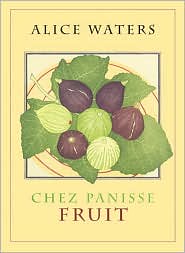
Fruit & Murder (Cookbook Review - Chez Panisse Fruit by Alice Waters)

Thursday, July 30, 2009

It was around 1:30 in the morning that I came to the logical conclusion that I would have to kill Alice Waters. It wasn't that I wanted to kill her, but rather my insanity compelled me to.

It's not that she had done me any personal wrongdoing. I certainly hadn't suffered at the taste of her food, the scorn of her tongue, or the lash of her organic whip which I hear can cause the bravest of chefs to become timorous in her presence.

Alice Waters has become a very central part of my life recently, not for her recipes or her restaurant or cookbooks but because of my thesis research on Slow Food. I have at this point read every essay she has composed, every speech she has given, every letter she penned about the subject. Her good, clean, fair mantra became the fuel of my sleepless nights.

I began to go mad. Soon I was accompanied by a disembodied, matronly voice whispering in my ear, "Is that salad procured from local growers? Where did those croutons come from!? Is that tomato organic?" I swear I'm starting to see her face in trees and toast.

I had to kill her if only to stop her from continuing her rhetoric which I would have to read which then would make me crazier. Her death would bring peace to my wearied brain and body and a stop to her tendentious prattling in my head.

Since I had no desire to be on the front page of the New York Times with a headline reading "Food Blogger Murders Nine with Crenshaw Melon," I would have to find another option. Somehow I needed to endear Waters to me so that I could assuage my murderous intentions.

-Figs poached in red wine with spices are dark and intriguing.-

Lucky for us both a possible solution lied in one of her cookbooks, Chez Panisse Fruit. It was a book that I had browsed many times in the bookstore the way hungry wolves may cautiously circle a baited trap, deciding if the meal is worth the risk. I would pick it up and poke my nose in and warm myself to the linocut illustrations. I would be starving for knowledgeable prose and her frankness when she mused over huckleberries would satiate me.

Still, I would not commit to the purchase, fearful that in the cookbook world Chez Panisse was passe. I can be at times a slave to literary fashion, but with the potential crime looming over me I needed to connect with Waters and make her human and not just a lecturer (and victim). Determined to avoid jail I marched into the store, snatched the book off the shelf, paid for it and escaped to the car.

I opened the book and read it cover to cover in one night. Each page was classic Alice as we've come to expect her, and this was her own locally produced rabbit hole through which I began to fall. Each fruit was celebrated and detailed with Waters' quaint voice. "Fresh dates are a civilized pleasure." "Tangelos are man-made or accidental crosses of mandarins and grapefruit." "We serve these delicate nutty persimmon cookies alongside winter fruit compote or Cognac-flavored creme brulee." Each sentence instilled passivity and calm. Waters was redeeming herself.

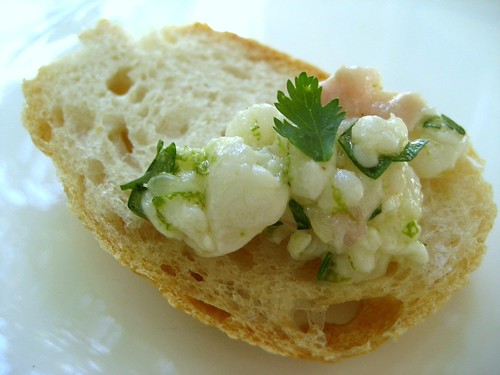
The next day, soothed though not steady I set to work prepping a dish of halibut and lime tartare with coriander and shallots. Her recipes would be put to the test to see if they would mollify my wickedness. Just as the limes and cilantro assertively cut through the buttery fish so did it my frustration.

This was soon followed with a small batch of Meyer lemon sorbet. The sunny flavor broke through any remaining cloudiness. Alice Waters was suddenly saintly. I still had no desire to listen to her go on about Slow Food this and that, but she would no longer find herself and the wrong end of a cheese knife.

-Blueberries preserved in sweetened Syrah. Delicious when reduced and served with skirt steak or duck.-

I took her fruitful recipes to heart whipping up batches of blushing rhubarb and grapefruit preserves. And though her recipe for raspberries preserved in brandy was a bit costly for me, her method was not and blueberries preserved in Syrah (a combination suggested by my friend Lynn) took its place. Their opulent taste rendered any lingering thoughts of the crime away as I popped the berries one by one or reduced some of the sweetened wine into syrup for scones.

Dried figs poached in red wine with orange, cinnamon and vanilla were spicy and breathtaking. Dolloped over fresh vanilla ice cream I couldn't help but let a perky smile escape as I ate. Treaties could be crafted over a dessert like this.

I was relaxed. Happy and full of fruit I patted my stomach and rolled my eyes. Alice would live. From now on when I have to read another one of her forewords to a collection of essays I plan to go to the kitchen and cook from her book. With its volumes of information on so many varieties of fruit from tropical loquats to rural gooseberries its always in season and useful. So if I'm writing in winter or studying in summer Waters doesn't have to worry as I know I can turn to whatever appropriate section based on what season it is to sooth my ire.

The book is simply one of Waters' most intriguing works, easily pulling you in with evocative artwork and recipes that are feasible and scrumptious. You'll feel a connection with Waters and begin hearing her sweet voice following you to the Farmer's Market. (Without it awakening your criminal impulses, of course.) A classic resource that every home cook should read at least once to better understand the world of fruit.
Halibut Tartare with Lime, Coriander, and Shallots
Adapted from Chez Panisse Fruit
Serves 6

3/4 pound halibut
zest and juice of 2 limes
1 shallot, minced
1/4 teaspoon ground coriander
olive oil
kosher salt
2 tablespoons chopped cilantro
bread or toasted brioche

Slice the halibut into thing strips across the grain removing any fibrous connective tissue. Cut the slices into strips and then dice as well as you can. (Having a sharp knife helps so you don't just butcher the hell out of it like I did.)

Place the lime zest, juice, coriander, shallots and olive oil and a pinch of salt into a bowl and whisk.

When ready to serve toss the halibut with a bit of salt. Add the sauce and toss again. Stir in the chopped cilantro and taste, making adjustments if necessary. Serve immediately on bread or brioche.

Buckwild

Sunday, July 26, 2009

Now at the age of twenty-six I'm able to say that I finally made my first pancake. I had never really been a super fan of pancakes to begin with. I liked them well enough but always preferred eggs and bacon, with my eggs still runny so that I could sop up the bright yolks with bits of slightly undercooked bacon and buttermilk biscuits.

This isn't to say I didn't enjoy pancakes. My mom always made little pancake people with smiling faces made out of raisins when I was a child. Elise's mom can pile onto my plate a six inch tall stack of blueberry buttermilk pancakes. To this I'll complain that my bird-like stomach can't possibly eat it all, but after she passes me some syrup, butter, and a tall mug of black tea she knows I'll finish them with a satiated smile.

So why all the sudden pancakes? The reason is that I had too much buckwheat on hand. What else am I supposed to do? I was buckwheat scone'd and buckwheat cookie'd out, though like the blueberry pancakes I could probably eat more had I not devoured them all already.

I blame Alice Medrich. Her cookbook, Pure Dessert, was the impetus for me to go all buck wild. Before her I had never even tasted the stuff. Buckwheat was more to me some rascal on an old comedy show whose mom was too cheap to buy him a haircut than an off the beaten path flour.

I picked up the book on a whim after being hypnotized by her sesame cake recipe. I was like a deer in headlights looking at the simple cake that was comprised of the most basic ingredients (that I kept regularly in my kitchen I might add). Normally not someone to make any purchase on the fly, I convinced myself by recalling some saying that any cookbook is worth the price for just the one recipe that inspires you. After twenty-six years I am, however, good at convincing myself.

The book's chapters are all arranged by type of ingredients such as fruit, grains, chocolate, honey and sugars. The book certainly requires you live near a Whole Foods of Co-Op. In order to explore the subjects eccentric ingredients such as lebni, chestnut flour and muscovado have to be procured. Not wanting to search high and low and pay out so much I looked for the more practical recipes.
-Buckwheat nibby butter cookies from Alice Medrich's Pure Dessert-

My eye was caught by a short recipe entitled nibby buckwheat butter cookies. Not an everyday recipe, but practical for me as I regularly keep cocoa nibs on hand which by my own definitions makes me eccentric, I guess. Flours, butter, sugar, and cocoa nibs. Easy enough. Off to the store I went to find a bag of buckwheat thinking on the way what other recipes I could do to ensure that I used every penny's worth.

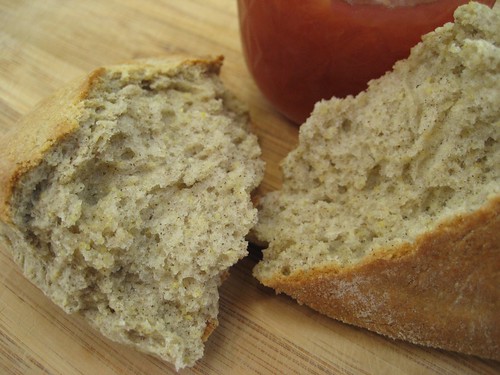
Before I move on I should elaborate on buckwheat. Not so sure myself what it was I decided to consult Regan Daley's book, In the Sweet Kitchen, my go-to resource for any baking questions. Daley notes that buckwheat isn't a grain but rather the seed of an herb. It has similar nutritional properties to wheat flour but is gluten free. The color is that of ground nutmeg and the flavor is nutty, reminding you of slightly bleached earth that's seen too much sun. It's appropriate then that the texture is sandy, or even silty like the bottom of a river shore when baked into cookies and muffins. An entirely delightful ingredient.

Anyways, after shopping I got home, then started and finished the cookies. I allowed them to sit to the next day per Medrich's instructions and brought them to work. Nutty, sandy, earthy, buttery. Perfectly matched with the mocha-esque cocoa nibs. I don't really like crunchy cookies but there were my exception. Eagerly eaten and encouraged to make more, the cookies were crunchy revelations.

The next recipe was Medrich's buckwheat and semolina scones. The different grains and flours offer an array of textures and flavors that are surprising at first, welcomed at the finish. I found myself greedily smearing the tender scones with apricot jam and marmalade and washing it all down with steamy cups of Earl Grey. Medrich knows how to work her buckwheat.
-Pictured: A sweet tasting buckwheat scone seconds before I devour it.-

Unlike the scones, my first pancakes had a little help. BF had made them plenty of times before so while I made the batter he did most of the cooking though I did flip the first one (go me!). As he slowly stacked them up their sweet-dough smell crawled along the walls of the kitchen and filled the apartment. I decided to break out the elderberry syrup that Elise had made from the elderberries we picked earlier this month and dropped a few pats of butter on top.

Buckwheat pancakes with elderberry syrup. It sounded so Chez Panisse and somewhat ozarkian. Either way it was good. The pancakes were wheaty and full and perfectly soaked up the port-like syrup, imbuing them with a deep indigo hue and a port-wine flavor. Cut with a bit of whipped butter it was a breakfast that declares, "This will be a perfect Sunday."

Buckwheat has earned its place as a regular staple in my pantry from this point on. I'm smitten. Enamored. It's too delicious not to have on hand as who knows what kinds of recipes can be concocted from it?

But now I'm curious what other grains and seeds and flours are like.

Anyone have any kamut by chance?

Buckwheat Pancakes
Serves 2, makes 8 medium sized pancakes
Adapted from All-Recipes

1 cup buttermilk
1 egg
3 tablespoons butter, melted (plus extra for the skillet)
6 tablespoons all-purpose flour
6 tablespoons buckwheat flour
1 teaspoon sugar
1/2 teaspoon salt
1 teaspoon baking soda

1. In a small bowl whisk together the buttermilk, egg, and melted butter. In another whisk together the all-purpose flour, buckwheat flour, sugar, salt, and baking soda.

2. Slowly whisk the dry ingredients into the liquid.

3. Place some butter into a skillet and set over medium heat. Pour on about 1/4 cup amounts of the batter onto the skillet. Let cook for minute or two. When bubbles form on top flip the pancake and let cook for another minute or two. Continue this process until all the batter is used up.

Cookbook Addiction

Sunday, June 21, 2009

The Unyielding has come and gone, its wave of destruction come and gone. After the plague I was left with only one or two good cookbooks left (the indomitable Judy Rogers' is stronger than any paper devouring mold). The cookbooks I lost however were mostly pieces of crap - ones where recipes were poorly tested and didn't taste good. The pictures were lies, pretty, well lit, carefully staged lies that didn't accurately represent the dishes. The Unyielding destroyed it all.

However, it may have been a blessing in disguise.

After I posted about it Kalyn - you all know Kalyn, Demeter of the Food Blog Pantheon - read about my plea and sent me a kind gift. A copy of The Joy of Cooking. A culinary tome which I'm ashamed to say I didn't own before her generosity.

As I pulled Joy out of its packaging and opened the new cover with that ever satisfying crack that comes with popping the cherry of a new book binding. I began to pour through the book page after page, chapter after chapter. Recipes for Kwanza. The temperature to fry chicken at. What to look for in a healthy celery root. The proper method for shucking an oyster. How to properly set a table (I knew that one thanks to mom). It had the answers to everything and a delightfully motley mix of recipes from every walk and culture to boot.

Elise told me that the cookbooks I lost was a karmic favor to me. There was no point in owning anything that wasn't helpful. A good cookbook should inspire, enlighten, educate. A good cookbook should be read cover to cover late into the night with your nightstand lamp burning bright into the wee hours and with a flashlight under the covers after your parents tell you it's way past your bedtime.

It only takes one or two good experiences to cause one to develop an addiction. My few quality cookbooks were soon met with new authors. Tannis, Roden, Ong, Daley, Medrich, and Greenspan now sat next to Lebovitz and Waters. I began to pour through them to learn more about the culinary world like how to prepare Italian food with everyday ingredients, learning about the trials of pumpkin farming in Yolo County, and the alimentary practices of Hmong weddings.

Of course I'm doing my best to only pick the cream of the cookbook crop. Ones that have real soul and passion in them, that have an engaging story, cookbooks that transports me to the author's kitchen or where I can hear their voice whispering in my ear, "Sear the beef on every side. Small batches, and don't crowd them. Then add the star anise so they release their oils. You'll know it's done when it becomes aromatic."

Right now my current read is Andrea Nguyen's Into the Vietnamese Kitchen, a riveting book where every recipe has filled my kitchen with sweet smells of perky lemongrass and air heavy with the sticky scent of palm sugar, the smell luring my roommate down from her room for a helping of whatever perfumed dish I've made. In fact I have some chuck steak marinating right now for her recipe for beef stew with tomatoes, lemongrass, and star anise. Expect a review later on after I try a few more recipes out and finish reading it.

So is there any cookbook you love that I absolutely must check out?
By the way, there is a new post (of sorts) over at The Rhetoric of Rhubarb. Feel free to learn about the Balkan myth of vampire watermelons.

My brain is soft like this ice cream I made to fight off idleness.

Tuesday, May 26, 2009

It is done.

Final papers. Over. Finito. Collectively I wrote about 80 pages worth of research in the past 4 1/2 months. I'm burnt out. Toasted. Fried. Beaten. And every other food related euphemism I can think of for just plumb tuckered out. (It's not plum, that would just be too perfect.)

Just one problem. I have no idea what to do with myself. I'm not one to have lots of ample time, so what I do manage to balance out is usually neurotically planned to the second so I can squeeze every possible moment of freedom out of that rare mini-stretch of time. I'm like a man sucking down the last drop of water from his near dry canteen in some futile attempt to ward off a parched and sun scorched death. In a way it's kind of sad how efficient I am about my lounging about and procrastination.

There is one academic caveat to my my chrono-affluent dilemma, and that is I do have to finish a 30 page thesis proposal on Slow Food rhetoric (Any Slow Food members in Sac able to sneak me into an event or two this summer for my research? I can't afford the tickets.). Still, right now? Right now my brain cannot process anymore information. In fact it's actually rejecting it and demands I fill it with episodes of Sex and the City and Justice League and the small stack of books I have been meaning to read.

But even that only kills so much time before my brain stonewalls even the most frivolous youtube video or video game or bike ride. I need to occupy my hands and left brain. I need to learn and try and make before all creativity goes *thhhbbblllllpppt*. I actually find myself right now not so much writing but typing in a fugue state without really comprehending or giving attention to the words going on the screen. It's just all a endless string of letters.

I keep my cookbooks close to my workspace and not in the kitchen. It sounds odd, I know, but there's reason behind this which is that they sort of give me a way to break from the stuff that forces my brain to make the words in my head. A happy place to escape to right in arms reach. The pictures, the combinations, the dialogue of cookbooks all sort of snaps me out of my vacant stare - cookbooks are my intellectual and creative smelling salts.

Ice cream sounds nice right now. I actually have a cookbook I received from my brother and sister-in-law that I still have yet to open. How sad is that? So I plan to open it up and find something tasty, something fun, something jaunty and radical and tomorrow, I'm going to fucking make it and start my mini-summer vacation, week off before I start to study again break with a bit of a sweet bang. It's got a few interesting ice cream recipes to try (it means nothing, David; you know that when it comes to ice cream you're still my favorite boy to dance with).

Orange ice cream with dates it is to be then. (Chopped and dried dates mind you. Fresh ones are pricey.)
The recipe comes from my long time neglected copy of In The Sweet Kitchen: The Definitive Baker's Companion by Regan Daley. It's fabulous book that's basically a class in desserts. And I mean a class. There aren't a lot of recipes - enough in various sections like pies, or frozen treats to give you practice in method but still make something one might call haute cuisine. But when I say class you need to understand that this is a 700 page tome of tools, methods, chemistry, history, ingredients, and so on. So far it's a fabulous read and it explains the science and chemistry without being to textbook-ish.

As I said before the recipes are a practice in method and technique - the problem is nothing is really simple when it comes to the recipes for the most part. The book kind of just tosses you in the deep end with recipes that utilize a lot of different practices and steps, but in the end you get a lot done and learn a lot along the way. It's not a learning mode tailor made for everyone but I happen to love it. Learn from your mistakes or make none at all and either way you learn a lot of techniques and methods all in one go.

While my brain was for the most shut off that night but this helped turn it back on. By the time the custard thickened in this orange-creamsicle tasting brew I was awake. Chatting with friends, making plans, and fervently bandaging my knuckles after an unfortunate and garish incident with the rasp while zesting oranges (after a quick disinfecting of vodka followed by a shot or three, that is).

I crashed after prep and clean up and churned it the next morning after allowing it to chill all night. A warm breakfast of Earl Grey tea and ice cream covered with chopped and dried dates perked me awake. I realized I should try to sit down, relax,and enjoy the lack of higher brain functions - it doesn't happen often that I get to actually do nothing. I plan to go outside and lay down on the grass and take in the smell of fresh air and growing trees. Actually stride through the farmer's market rather than dash madly to get back home and start my chores and errands. Maybe even *gasp* read a book for fun, not skim it due to time constraints.

After, perhaps, another bowl of ice cream.

(By the by, there's a new post up at The Rhetoric of Rhubarb. Hope you enjoy that while eating a bowl of this delicious and rich ice cream.)
Orange Ice Cream with Dates
(I added vanilla for a more creamsicle taste. Regan says to mix in fresh ones but dried should be added on top else they become mealy when cold.)
About 1 1/2 quarts


2 cups half&half
2 cups heavy cream
3 tablespoons of orange zest
1/2 vanilla bean, seeded (I used an old husk that I had lying around which was fine)
6 large egg yolks
2/3 cup sugar
1 cup orange juice
chopped dried dates

1. In a heavy bottomed sauce pan combine the half&half, vanilla bean, 1 tablespoon of orange zest, and one cup of cream. Place over medium-high heat until bubbles break the top. Take off heat and let flavors infuse for five minutes.

2. Meanwhile, in a large bowl whisk the yolks and sugar together till pale. After the hot liquid has infused add a small portion to the eggs while whisking, fully incorporating it. Add a little more. Then some more. Then add the whole of it till you have one good custardy mixture. Add the orange juice and fish out the vanilla bean husk.

3. Place over a pot of simmering water creating a double boiler. Stir with a wooden spoon for 10 minutes. Remove bowl from heat. Add the remaining cream and orange zest. Place in fridge with plastic wrap covering it with a vent hole or two to allow steam to escape and to prevent a skin from forming on the surface. Chill for 4 hours or overnight.

4. Place in ice cream machine and churn per manufacturer's instructions. Added chopped dates and serve.

Happy Blogday to Me + Cookbook Giveaway

Sunday, May 24, 2009

I find that I have little attention for personal projects in the long term. For a while they put me into a vice grip; I hunt out the source and absorb all knowledge about the subject, read everything I can get my hands on, and commit myself body and soul to it. That is, until the fascination wears off. Like the thrill of tossing a puff of colorful confetti where after a few minutes watching the delicate paper dance in the air, transporting you to somewhere more jubilant, it becomes less and less exciting as more of it falls to the ground. Eventually those happy feelings fade away completely until it all just lies there on the floor to be cleaned up.

Those pots I bought for a little shade garden sit outside my apartment barren and hungry for green after a frost killed their verdant holdings back in November. I have a pack of tarot cards collecting dust, the deck apparently unable to divine its eventual fate wedged between the works of Jane Austen and Arundhati Roy on my bookshelf. My attempts to teach myself Italian were laughable at best, I still can't count, let alone ask for a restroom - I was relieved when I learned during my last visit to Italy that every native under 35 speaks English fluently (and always prompted with "My English is not so good.").

In fact the only major project I started and finished was the programming of two video games back in the first two years of college, each one took about a year, the first being a learning project, the second resulting in an epic 30+ hour RPG.  (I am still very, very proud of those. And yes, I am kind of a nerd.)

So it shocks me that blogging has brought me along in its own for three years today. But I don't think that I can consider blogging merely a project anymore. It has become an extension of me, in fact I can't imagine myself or my life without Vanilla Garlic anymore. It would be as if you removed an integral piece of me. This blog contains sweat. This blog contains tears. This blog contains joy. This blog contains hard work. This blog contains soul. This blog has been with me through the good and the bad. This blog has become a source of knowledge and discovery. A source of amazing opportunities and experiences. 

But best of all? Best is that without this blog I would never have met so many amazing, inspirational, intelligent, creative, soulful, passionate people who have all become such cherished friends and, indeed, even family. The people in the food blogging community shock me to no end in their warmth and affability and talent. 

So with that - thanks to all of you who make blogging such a part of me. 

Ah, but the blogday! I almost forgot! Now, I've always been more of a gift giver than receiver. As such, I've decided to offer a new copy of one of my favorite and cookbooks, The Sweet Spot by Pichet Ong. Of all my cookbooks this is one that I turn to time and again for inspiration and as a mean to impress. In mine the pages are wrinkled in spots from my sake soaked fingers, smudged where I accidentally allowed caramelized palm sugar to sputter, stained where the juice of so many plums dribbled off my knife and onto the instructions which no longer mattered as by then I knew the recipe by heart. Indeed my copy when opened bombards you with the heavy aroma of dessert and cooked fruit from being so loved and having met the rigors of my kitchen. A fusion of Asian style ingredients with Western techniques. It's one of my faves so I think someone else should fall in love with their one of their own.

Want to win? Leave a comment by midnight on May 30th. I'll put the names into a random number generator and announce the winner on May 31st so be sure to check back in and see if the winner is you. Good luck!

A Pause for Raspberry Sherbet

Monday, May 11, 2009

I turned my face away from the pastel magenta explosion coming from the counter and thanked my lucky stars that I actually put on the stupid kitchen apron. It had been a purchase I had long put off but now that I had finally paid out for one I always forgot to put the damn thing on. Luckily, a load of wash was saved and one of my favorite lay-around shirts was spared (only, of course, to be destroyed an hour later by an orange highlighter falling out of my mouth).

I looked down at my raspberry-milk slurry which would soon be churned into raspberry sherbet a la David's recipe, albeit with a bit of orange water and mandarin blossom vodka added. As I poured it into the well chilled bowl I began to think again of how I could utilize Sarah O'Brien's argument that the swamp in Hemingway's Big Two-Hearted River precipitates the eventual "machine in the garden" dilemma of pastoral escape and apply that to the manufactured food Nick eats during his lunch in the story.

Damn, stupid brain. "Stop thinking!" I thought to myself. All I wanted was to make something sweet. Instead my mind kept wandering back to papers I had to write.

With the looming knowledge that my summer vacation would be devoured by endless research, reading, and writing; and my current situation with final papers and thesis proposal, every last square inch of my living room and bedroom were buried in books and papers and notes. More than a few pieces of clothes had been ink stained and Mace was constantly stalking my printer should is show signs of loud ferocity again in it's unending effort to print more sources for me to glean over.

For those curious, my thesis is on the underlying problems in the rhetoric of the slow food movement. By slow food I do, indeed, mean the ACTUAL Slow Food Movement started by Carlo Petrini, but will also discuss a bit of the whole green, organic, local diatribes that people go into. Not to say that I don't agree with what they say, but sometimes the arguments don't take in the whole picture or are a bit too utopian (or in this case Watersian).

Furthermore with finals this year, in order to double up my reading, I ensured that my papers were all food related so I could read books I would could use for my thesis. The ritual of the meal as an indicator of societal values is the paper for my Cultural Studies class, the other on the use of food in Hemingway's novel "Farewell to Arms" and short story "Big Two-Hearted River" as a way to demonstrate the food and eating scenes as a form of escapism and thus a way to psychologically analyze the characters. The irony of the sherbet situation here was I was using food to escape the paper about food as escapism (I wonder if I can work this post in somehow...?).

As you can see I'm drowning in food theory, rhetoric, and psychology. It seems I have laid out my future as a food-focused sociologist of sorts.

But yes, the sherbet. We've gone off topic a bit. I needed to simply escape reading and writing about the blah blah blah of food and actually sit down and make some and eat it. Remind myself why I actually give a damn about it all.

The sherbet was perfect. More than perfect. It was rejuvenating. I picked up some of the books off the couch and plopped down with a ramen bowl of the ice cream. Cid and Mace curled up next to me and I pressed play on the DVD remote to start the Sex and the City DVD start up where I left it. A quick pause in the day to relax and rekindle my fires with a chilly treat, refreshing myself and recalling why all this food study crap is just so much fun.

Book Review - "A Homemade Life: Stories and Recipes From My Kitchen Table" by Molly Wizenberg

Thursday, April 2, 2009

I can’t say I know Molly personally at all. In fact I believe our entire communication history has simply been one or two e-mails about book publishing long, long ago. However, I believe I know her now, at least in a sort of separated, distanced way similar to the way I used to know a pen-pal I had in D.C. back in fourth grade (I still can’t recall her name after all these years). Molly has become a confidant, telling me her secrets, and recounting snippets of her life. Indeed I feel we even have things in common, and though I never had a smoky eye makeup phase we both had a penchant for wearing a dog collar in college.

The reason for the familiarity is due to her new book, A Homemade Life: Stories and Recipes From My Kitchen Table. Molly Wizenberg, the prolific writer of Orangette, one of the gods of the food blog pantheon, puts to paper rather than the publish screen on blogger, the various events that shaped her food focused life. And just like her blog, the stories are artful, poetic, and vivid, capturing in each single sentence the emotions of the moment and their meaning. So sirenesque is her song that I found myself shirking all responsibility to put away all three hundred some pages in a two days.

My only slight complaint, if you can even call it that, is that each chapter is only about 2-5 pages followed by a recipe. It reads much like her blog. This then purports the question, “Why should I pay $25 when I can just read her blog?” As for me, I only read Orangette every so often. Once a month or so and usually just the most recent post. If you’re like me then the book is a fabulous introduction into her prosy and pithy writing style. Her words carry you in and embrace you to sit down in your most favorite chair, sip some tea and just ahh… relax. Each little vignette is what an old professor of mine would call “As long as a piece of string.” The stories convey the emotion, people, and points in the right amount of words. Still, I found myself wanting more simply because it was all composed so well.

Still, while this is a memoir, I would call it a cookbook. While many food memoirs have recipes in them, oftentimes they seemed crammed in there with little introduction or relevance to what was being discussed. Rather Molly uses her experiences and people and defines them through a particular dish. She doesn’t simply say, “We made this,” but details the recipe’s history and emotional significance. Take for example the chapter "Like Wildflowers" where she describs her interactions with a close friend named Keaton and uses it to introduce the recipe for cranberry chutney with crystallized ginger and dried cherries:

For six months we palled around Paris, teaming up for research projects and sharing packets of Peanut M&M's from the metro vending machines. She was with me when I met Guillaume, and when he disappeared, and when we came back to the States, we drew together in the campus housing lottery and wound up sharing an apartment. It was a dark, gloomy building on the edge of campus, but we did our best to make light of the brown shag carpet and the mold on the bathroom ceiling. I taught her how to sear tuna in a cast-iron skillet, how to roast Brussels sprouts and potatoes, and how to make my family's favorite cranberry chutney with crystallized ginger and dried cherries. She shared her formula for spinach salad with green apples, toasted walnuts, and blue cheese and made me giggle every night when she put in her mouth guard (she grinds her teeth when she sleeps) by saying "I love biscuits," which came out as "I love bis-CUSTH." I love that girl. (208)

Furthermore, the recipes are simple, clever, and engaging. I rarely find a cookbook that I flag so many pages of with the direct intention of making the recipes. The recipes are diverse, offering something for everyone from lemon yogurt cake to an intriguing salad (via husband Brandon) of arugula, pistachios, and chocolate; and a simple French snack of bread with butter and radishes, which when made was met with resounding approval from the roommate and me.

Molly does seem to wax on about marriage and love and whatnot (this is not a book to read right after a nasty break-up, you'll just end up bitter), and, depending on your point of view, it’s either chick lit. or cleverly written appreciation for all that life and the people in it have given to her. I find it to be the latter.

Molly’s writing has been called reminiscent of MFK Fisher. I love Fisher, I do, but to compare them is silly. Molly’s prose possesses a different air, a sort of witty frankness to it that reminds me of those people in college I envied because they were so humorous and poignant in everything they said. Sure both Fisher and Wizenberg spent time in Paris and found love in their marriages and food, but its apples and oranges. Out of all the food memoirs out there, Molly stands out with the greats like Fisher, Bourdain, and Steingarten. It’s a memoir and cookbook that will be read and re-read for years to come as part of the great and ever growing canon of food memoirs.

Cookbook Review - Urban Italian by Andrew Carmellini

Thursday, March 19, 2009

I think the most daunting task about getting a cookbook which singularly covers a specific type of cuisine you aren't used to cooking is its perceived exoticness. It can seem, at times, overwhelming. That's how I feel, or felt, about Urban Italian by Andrew Carmellini.

I'm generally not a super fan of Western European styles of food preparation and flavors. They're nice enough, I admit, but I prefer the bold temerity of Asian and Middle Eastern styles of cooking. I learned to cook Chinese food from little old Chinese women in college. I picked up a penchant for Lebanese and Israeli food thanks to my parents traipsing me through so many parts of the world. I adore Costa Rican cooking, and their clever use of papaya seeds as a faux-pepper (as I see it with my American eyes). Indian style curries are a constant staple for lunches and a quick way for me to use leftover produce.

My kitchen is stocked with miso, dashi, ground mace, nutmeg extracts, black bean paste, sumac, and pomegranate molasses. My fridge filled with bok choi, eggplants, Chinese mustard greens, and purple long beans. Italian food is rare. I have tons of garlic and a few cans of tomatoes, but the only pasta I had I threw out as I'm pretty sure I bought it back in 2003 and the bag had torn open.

The sad fact is though, many friends I have are timid to coming over for dinner. They fret about what I may serve, and indeed, I am questioned all too often after offering an invitation, "Depends, what are you making?" I decided then and there that it was time to learn to make a few dishes that were more familiar using ingredients that didn't have so many x's, z's, hyphens, or other linguistic circus performances.

To avoid this I went out and purchased a copy of Urban Italian completely on the fly. There was no research that went into my decision making; rather Ruth Reichl suggested it, the cover was pretty, and the opening anecdotes were well written. These anecdotes, notes from Carmellini which colorfully demonstrate how he came to develop his cooking style without actually talking about cooking, was artful and engaging. A quick flip through the pages and the recipes convinced me that this was a book worth trying.

The recipes are split up into 6 main sections: antipasti, primi, secondi, contorni, dolci, and bases (read: appetizers, first course, second course, vegetable/side dish, desserts, and base recipes). Each one is carefully laid out and introduced with clarity and a bit of wit.

Throughout the book you'll find little sections about ingredients or techniques. Taggiasca olives are described with clear details: "Taggiascas are a little like Nicoise olives, only metier, and with a stronger olive taste, since Taggiascas are stored in olive oil instead of brine" (166). This same clarity is applied to cheeses, vinegars, and other Italian food stuffs. Some recipes cover in detail various techniques; the ravioli and gnocchi recipes are fine examples of this, each with step by step pictures and detailed instructions.

If you keep a kitchen with most of the Italian ingredients called for, or at least have a good source of where to find things such as sheep's milk ricotta then you're set. For me, I had to make a few trips. Still, the recipes were simple to execute and thoroughly tasty. The spaghetti pepe de vellis is amazing in flavor and texture; spaghetti with anchovies, Pernod, Nicoise olives, parm, and plenty of garlic "sliced Goodfellas thin." The almond granita is also a favorite, one I've now made plenty of times and always impresses company.

Furthermore, with the purchase of these ingredients, I'm set to make these Italian dishes again. In addition, after understanding the flavor pairings and techniques, I can put together Italian-esque dishes myself on the fly it seems. (My roommate is also a huge help in this arena as well.)

The pictures are engaging and well laid out. Even the most fervent photography inclined foodie will appreciate the rustic shots taken and the clarity of the step by step photos. Something any food blogger can attest to being a total pain in the ass. Still, I found that there could have been more shots of completed dishes and fewer shots of styled ingredients.

Simply enough, I find it's a good cookbook. Is it great? That may be a bit generous of an adjective, but again, I'm biased. Italian isn't my thing, and I honestly feel that I still need a comprehensive Italian cookbook someday to really ground me into the style and mindset of Italian cooking. This has definite flair and a bit of a cosmopolitan domesticity to it but it isn't the end all by a long shot. Still, if you're proficient in Italian already, this may be the next logical jump for you.

It has done its job of making Italian food less exotic to me, rather the style seems warming and familiar, something that isn't quite so strange anymore. For that, I must extend thanks to Carmellini.

Cookbook Review - A Platter of Figs by David Tanis

Wednesday, February 11, 2009

David Tanis, a chef who made his years at the famed Chez Panisse, recently came out with a new cookbook, A Platter of Figs. A cookbook which dutifully presents the idea that food should be harvested and cooked in season and should always be the best ingredients you can find.

Indeed, the book is about slow food, but isn't. Rather than wax poetry about such and such a dish, he goes on to say that you use what's seasonal and fresh simply because it is. There is no rural pontificating or drawn out melodrama of the fig but rather a straightforward discussion conveying the idea and concept of the platter of figs for his book:

The platter of figs perfectly illustrates the idea of eating with the seasons. Fresh figs are available for only a few weeks of summer. The first figs are in June, but June figs usually pale in comparison to the late-summer crop, which benefits from warm August days. As with good tomatoes, you wait all year for the best figs to arrive. The reward is heavy, juicy fruit with oozing centers - sweet figs to swoon for. Above all, the platter of figs is a metaphor for the food I like. Fresh ripe figs are voluptuous and generous, luxurious and fleeting. And beautiful. - DT (introduction)

The menu based compositional approach to his organization is innovative and, at first, jarring. Breaking away from more conventional means of organizing a cookbook (such as salads, soups, poultry, dessert, etc.) he has divided the book by seasons. The recipes are then organized into four sets of six menus, each menu consisting of 3-4 recipes (although some recipes are actually three or four based on components) and each with a theme and following the bounty of the season. For example in Summer you will find a menu called "yellow hunger" which consists of recipes for shaved summer squash and squash blossoms, grilled halibut with Indian spice and yellow tomatoes, and peaches in wine. It's intriguing to be sure, and one must approach the book with a new mindset in order to better navigate the book. It's only true pitfall I find is that one must refer to the index more often than usual than with a more conventionally ordered cookbook.

The foreword by Alice Waters sets forth a tone that envelopes and invites you into Tanis' kitchen, where he then whisks you up and explains in tranquil and familiar terms his personal history and development of his style of cooking based in simplicity of season.

A key idea behind this book is encapsulated in that term: Simplicity. Given, these are not 30 minute meals; some of these dishes will require you to spend time in the kitchen. Nor does simplicity mean that each recipes is perfectly suited to a beginner. The simplicity lies in the use of ingredients, flavors, and preparation. You will find no foams, no strange ingredients requiring a search that would beguile even Indiana Jones (although a trip to the Asian grocer or butcher may be required for squid ink and rabbits), no sous-vide or anti-griddle preparations. Some do seem a bit daunting but as with all cookbooks a certain level of trust on the part of the reader is required.

Going with the book I decided to make a go at a few of the Winter menu recipes; I mixed and matched a bit based on my budget and sloth to test some dishes and put his thesis to practice. The green chile stew is bold and spicy, and as Tanis suggests, is perfect for fighting off the cold. Its heat, easy preparation, and simple use of ingredients make it versatile. The roasted apples with cognac and sugar made good use of ancient liquor that had last seen daylight in 2004 - simple with the sugar in the apples caramelizing and bandying back and forth playfully with the cognac. The watercress, beet, and egg salad was a bit encumbered for a salad but it was a playful dish of contrasts (I did substitute watercress for arugula I found on the campus grounds, free food is better). It stood up to David's idea that salads aren't something to just be tossed together by a recent CIA grad but rather have to be carefully developed with each flavor taken into consideration like any other dish.

A Platter of Figs is by and far one of the best cookbooks available right now. Reading it, it shines as an obvious choice for the Gourmet Cookbook Club. If anything the cookbook serves as a sort of tutorial. Even if you don't prepare any of the recipes, a casual reading will instill the idea of simplicity in season which you will almost immediately apply to your own outlook and approach to food and it's preparation. To those who already adopt this mantra and wave off that this is simply preaching to the choir, well sometimes the choir needs to be reminded why they're singing.

A Cookbook Made for a Home

Sunday, December 10, 2006

I recently got hold of The Good Home Cookbook, and have finally had a chance to test it out. Honestly, I have to say I was more than pleased with this cookbook for a multitude of reasons.

To begin with, this is not an esoteric coffee table cookbook that will have you braising artichokes, or creating elaborate appertizers with ingredients you'll only find in your local black market. The recipes that comprise it's 500+ pages are comfort foods and reminders of home. It's as if every mom in America - from every Italian, Armernian, Spanish, Thai, Mexican, East Coast, Southern and every other family - got together and brought all their best recipes and compiled them into one cookbook.

You'll find meatloaf, clam chowder, chicken masala, fish tacos, spaghetti, chocolate cake, ceasar salad, and every other homey recipe you can think of that came out of grandma's old recipe box. The directions are clearly laid out and while there are no pictures, you find yourself lost. Plus, it's more than likely you've had every one of these dishes once before, so you have an idea of what the end product should be. Pictures in fact probably would have taken from the charm of this boo, as it's layout has a blue retro groove going for it which is uncluttered and pleasing to the eye.

Another bonus is that each section has a few helpful instruction pages. The seafood section for example has direction of shucking oysters, storing clams, buying and handling crabs, and so on. A definite bonus if you're encountering a new ingredient or cooking meathod.

The cookbook also boasts more than 1000 recipes, and while it's true, you'll find some basic repition. In the dessert section they give a recipe for buttercream frosting. Following it are recipes for mint frosting, and lemon frosting, which was just the original with the addition of a flavor component.

This cookbook in my opinion falls into the category of The Joy of Cooking, a tome perfect for the beginning or experienced cook. For anyone who is just learning to cook for the first time like a new college student, this book is a perfect starting place for them. The knife nicked hands of the experienced home chef will also find this as an invaluable resource as it will perfectly as a quick idea guide for a satisfying meal during the work week.

Another interesting aspect is that this book was tested out in a blog and sent to tons of people across the U.S. to test out the recipes. This helped ensure that all the recipes were easy, simple, and accessable.

Overall, has I not already been given a copy, I would have gone out and bought one for myself, and will probably purchase this as a housewarming gift for years on end.

The Good Home Cookbook website

A Perfectly Cheesy Cookbook

Tuesday, November 21, 2006

Who doesn't love a warm, comforting grilled cheese sammich when the weather gets cold? Some good bread, a few slices of cheddar, butter, and a big crunchy pickle is heaven to me! Throw in a side of tomato soup and we got a winning combination!

I always thought I was creative when I took spinach, pears, and brie and made a very classy little grilled cheese pressed between some heavy skillets. However, Marlena Spieler - a long time writer for Bon Appetit and author of many cookbooks - has brought grilled cheese to a new level. Her book Grilled Cheese: 50 Recipes to Make You Melt is just the thing to bring a creative comfort to your kitchen during the cold season.

The book starts out with a comprehensive review and introduction. She begins by covering various types of cheeses (blue viened, soft, cow, goat, semi-hard, spiced, bloomy rind, smoked and so on in extremely specifc subcategories) and how each can be perfectly utilized and paired for your own creative uses. All are accompanied by a short description describing their general flavors and properties. Since one may not be able to eat a whole wedge of cheese, Spieler also considers the proper storage and handling of cheeses. To further aide the grilled cheese selection process, a section covering breads, meats, fuits, chutneys and so on are all covered so that your experience with her recipes and your own home concoctions! At the back is even a resource guide on where to find good cheese stores or markets, and suggestions on finding local cheeses.

But how do the recipes stand up? Perfectly. Rob and I have already found a few favorites, ensuring that we now keep a few select cheeses on hand, and nudging us to always experiment with a new piece of stinky goodness. Rob's current favorite is the Mediterranean Meltdown; tomatoes, Mahon cheese, and fresh thyme on olive bread. We threw in some sauteed red onions as well for a truly filling and rustic sammich!

I've become partial to the fresh mozarella, fig jam, and prosciutto for it's sweet and salty sensations. The raddicchio, Roquefort and toasted pecans on pain au levain is another delectible tid-bit that goes well next to a blazing heater or roaring fire place.

Breaking out the heavy skillet is definetly part of the charm, but don't think that some of these don't mix it up. Classics such as the tuna melt are revamped. Recipes calling for home made chili aioli, and fruity chutneys make for a flavorful and fun experience and a perfect excuse to visit local farmer's markets. Desserts, salads, and a classic accompaniments also adorn the book, and well as a small section for a few homemade mustards to keep things spicy!

The book is filled to the brim with gorgeous photos any photographer would envy. Sheri Giblin, a local San Francisco food photographer, has done an excellent job bring each and every recipe to life. Luckilly with grilled cheese being such a simple fare, many times yours will look much like the photo. Mine have to my total surprise.

Downsides? The price is a bit higher than I would pay, though it was just lowered to about $13. Good thing I got a discount copy for $2 at Amazon.com. Plus the shipping, it was about $5.37. A total steal. I highly suggest you go order a bargain book copy. Mine has one or two stickers on it, but really, who cares? The book has tons of great ideas, and will fill you with inspiration for simple meals, and fun lunches with friends.

Overall, the book is shibby, affordable, and truly cheesy.

A Course on Cheese

Wednesday, May 31, 2006

I love a good piece of stinky cheese. I enjoy taking it out of the fridge and letting its nasty old stank peel the paint off my walls, knockout my cat, and make the local children cry. It's how you know you gots yerself sum quality cheese right there.

Unfortuneatly, I must admit, my cheese knowledge is limited to about, oh, whatever I might have picked up from a cookbook or Food Network. Thank heavens for Max McCalman, may chiors sing his spoiled milk praises! For those who don't really know this guy, he is the man and fromager (cheese brainiac) who pretty much single handedly spearheaded the idea of presenting true artisinal cheeses, cheese courses, and giving cheese the kind of credit we give to wine here in America. He has become well known for his work in the New York restaurants Picholine and Artisinal, and luckilly for those of us not living shibby in New York, has gone out of his way to create a wonderful guide to the best of the best in his second book, Cheese: A Connoisseur's Guide to the World's Best.

While McCalman's first book, The Cheese Plate, co-authored by David Gibbons, was a chic everyperson's guide to wine and cheese pairings, Cheese simply gives us 200 of the world's best cheeses. Listed in alphabetical order, each cheese is described beautifully and concisely noting where it is produced, how it is produced, how best to enjoy it, and the underlying flavors you should expect when experiencing it. I use the word experience, because after trying some of these selections, it really is the only appropriate word that the English language can offer me. McCalman also goes ahead to offer with each cheese a variety of different wines (red, white, and blush) and even some sparkling wines that should help you wow your party guests' palates.

McCalman, also understanding our blind kitten approach to cheese, also guides you through various aspects of cheese. Early chapters deal with how to select, store, prepare, serve various kinds of cheese. Later on we are given a thurough lesson on how to pair cheese with various breads, fruits, and nuts, or how to simply lay back and enjoy a piece unmolested by any other food. Basics for how to create and serve a cheese course or a cheese tasting party will inspire you to host your own (I know I plan to have a truly stinky one shortly!). Lastly, of course, an extensive, though maybe a bit too much so, course on how to pair wine and cheese. The watchful and caring teacher, he does this in a simple, plainspoken manner, allowing any reader to understand not only how to preform each task, but the why behind it as well.

I have to say, I would not have discovered my love of Lancaster, my passion for Prattigauer, my desire for Doddington, and how I give resounding praise to Roaring 40's Blue!

Overall, I give Cheese a 5 out of 5. This book is a wonderful addition to any food lover's bookshelf. It's succinct, informative, and covers a wide variety of cheeses you can find from California to Italy.

Vanilla Garlic All rights reserved © Blog Milk Powered by Blogger