

-The flavors of Sichuan, China.-
While I rarely ever post about it I actually cook a lot of traditional Chinese food. It's what I was taught to make by a few Chinese friends and their families way back in college and since then it's pretty much stuck as my go-to cuisine due to its ease of preparation, general frugality, and intense flavor using a limited amount of ingredients.
For most non-Chinese people traditional Chinese food is a bit out of the way as it requires a number of somewhat unheard of or exotic ingredients that will only be used once, usually for a recipe seen in a magazine or on a website that sparked some one-shot culinary gung-ho. Afterwards, the bottle of oyster sauce and jar of chili bean paste is quickly forgotten on shelves behind the olive oil and two kinds of Pam.
The things is is that once you have the ingredients and learn how to really utilize them they become indispensable. I can't think of what I would do without my chili garlic paste, dark soy sauce, or Chinkiang vinegar. They've become part of my everyday pantry, and I use them for any number of dishes the same way another person might wield shallots or vegetable oil (which, incidentally, are also part of the Chinese pantry).

-Molten heat in a tiny package.-
Personally, I've always been drawn to the fiery broths, stir fries, and street side style noodles that the Sichuan (also Szechwan and Szechuan) Provence is so well known for. Chinese food expert, Fuchsia Dunlop, points out a common Chinese saying about Sichuan food: shi zai zhong guo, wei zai si chuan; which translates as "China is the place for food, but Sichuan is the place for flavor." It's a phrase I hesitate to argue against, particularly because the Sichuanese have a particular knack for taking a variety of tastes and weaving them into delicate patterns of flavor. Certain spices like garlic, scallion, star anise, ginger and any number of fermented bean pastes and chilies prepared in any number of ways are key to these carefully layered concoctions. Indeed, Chinese chefs boast twenty-three distinct flavor combinations (some entertaining examples are lychee flavor, strange flavor, and hot-and-numbing flavor).
To cover all these ingredients and flavors would require another blog so I thought I would talk about two of the defining pepper spices of Sichuan style cuisine: Sichuan peppers and Tien Tsin peppers.
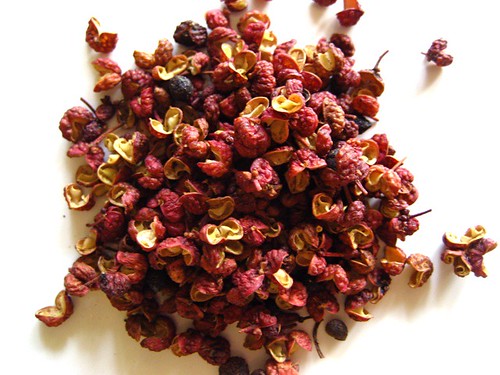
Sichuan Peppers
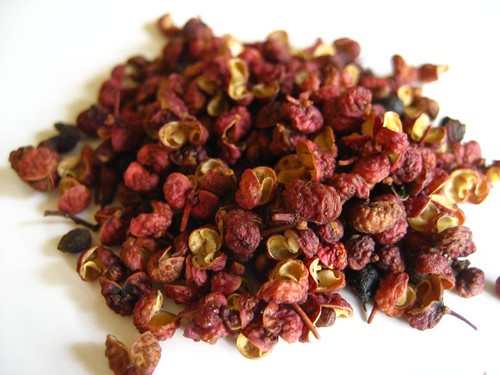
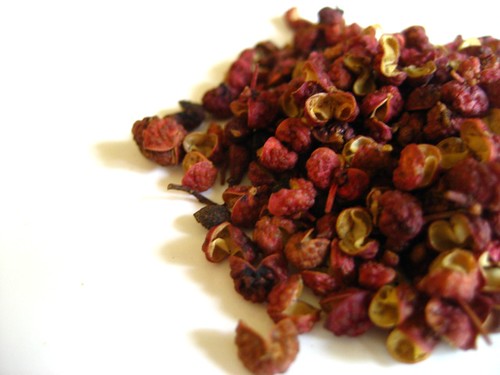
Sichuan peppers are the most distinct flavor that characterize, even define, Sichuan cuisine. These peppercorns are the dried pepper husks of a shrub that grows in Northwestern Sichuan. Their knobby, pink, almost clam shell appearance is distinctive in the spice world. The seeds looks like average black peppercorns, but hardly contain any flavor. The pepper husks are lightly roasted before use to release their oils and heighten flavor in dishes.
For years, the United States banned the import of Sichuan peppercorns because of their potential to carry Citrus Canker, a bacteria that had wiped out scores of citrus trees in China and the U.S. Department of Agriculture was being cautious of. In 2005, the USDA lifted the ban but cautioned that all imported Sichuan peppers had to be pasteurized beforehand.
Sichuan peppers aren't hot in the traditional sense in that they don't create a burning sensation or have a pungent flavor. Rather, they have a woody, citrusy flavor that causes a tingly numbness (think of the buzz created on your tongue from a carbonated drink, or the lingering tickle of Novocain when it begins to wear off). This is caused by hydroxy-alpha-sanshool, a molecule common in the Zanthoxylum genus of evergreen shrubs.
This particular flavor is prized in Sichuan cuisine and is often paired with sweet, salty, and savory flavors but is most often seen mixed with hot chili peppers to create an intriguing layer of heat and numbing which excites the palate and encourages a pleasurable sensation. They are often added near or at the end of the cooking process in order for them to retain their flavor and numbing qualities.
Most people aren't too familiar with the spice the first time they try it and may not know what to look for or how to identify it in a dish. As such they may add too much and overpower a dish making it extremely medicinal and bitter. If you are first encountering a Sichuan pepper try the following experiment: pop a pepper in your mouth and chew it gently two or three times and then spit it out. Wait a moment and then you will notice the lemony, woody flavors followed by a slow, creeping tingle on your lips and tongue. DO NOT chew a few of them for an extended period of time. Seriously, you will hate yourself.

Tien Tsin Chili Peppers
Tien Tsin peppers are named after the province in which they're grown, Tientsin (which is the romanized spelling for Tianjin). The chili is also known as chao tian jiao, or "facing heaven" chilies as they grow pointing upwards. They're short, fat, and a lacquered burnt-red color. They're also incredibly fragrant and have a slight Italian red-pepper flavor which, at the same time, is both quite pungent and musky.
These peppers are sun-dried and quite light, but contain a high number of seeds. Shaking one you'll hear a loud rattle as they violently bounce around waiting to be released. Don't be fooled by their size though, these chilies are extremely potent. While the flavor lies in the dried fruit, the seeds are searingly high on the Scoville scale. Some recipes may ask you to toss the seeds so that the pepper only lends the flavor of the fruit. The seeds are incendiary and if not reigned in with a steady hand can easily overpower a dish.
To use them just snip them in half or grind them into course flakes. For soups and stews many people just toss in a chili or two whole to flavor the broth. Often times people may substitute a Thai chilies which are even hotter and will make a dish inedible. If this is the case use a third of the number of Thai chilies you would use in place of Tien Tsin chilies for a recipe.
-The prettiest of peppers.-
These spices are becoming quite common in Asian markets and can easily be purchased at affordable prices online (I use Penzey's). I encourage you to try your hand at using these spices and giving some traditional Chinese cooking - like Kung Pao Chicken - a shot.