When writing papers I usually need to have a study break of some kind. More often than not my study breaks consist of cooking something I've never made before. The novelty of crafting something strange and new puts me in a different mindset, refreshes my brain, and (most importantly) gives me something tasty to munch on. Mind and body refreshed and awakened.
For me, one of the strange and exotic I before feared was jam, and subsequently, canning it. Now, all my previous canning experiences are what I would call catastrophes. There was that one time I accidentally dipped my arm into a pot of boiling water. There was the time the tomato sauce jar blew up in my hand, where afterwards a rousing game of "Is that blood or tomato sauce?" was enjoyed by all. The few times I wasn't injured resulted in the food going horribly wrong as in the black sludge-like strawberry jam that left my kitchen smelling like pure hate and despair coalesced into a deadly aroma of smoky pitch.
Somehow though this worked out. By luck, karma, or divine providence I made jam. Good jam.
Really good jam.
Now after working non-stop on
my Hemingway paper, this jam derives its genesis from Hemingway's short stories, novels, and memoir. I used a tin of canned apricots due to their importance in the short story "Big Two-Hearted River" in which the solitary character Nick downs a can of apricots claiming them to "be better than fresh." Canning in the 1920's was a relatively new concept at the time - women were saved time and soldiers had better access to healthier food, canning was to the 1920's what local and organic is to us today.
The Riesling is because it's fucking Hemingway. Alcohol
must be used. Choosing the Riesling did take some time though as I and two wine guys at Whole Foods stood around discussing the principles of the project I was to undertake, what would pair well with apricots, and the many references to booze in Hemingway (so it's not like it was easy to pare it down as every beer, wine, liquor, and spirit known to man was game).
Finally the product itself - the jam. Catherine in the novel A
Farewell to Arms becomes obsessed with breakfast as a means of psychologically and emotionally escaping her situation of being
very pregnant and trying to row a boat during a storm from Italy to Switzerland to escape the Italian army. She feels that by focusing on breakfast she can displace her anxiety and stress from her precarious state.
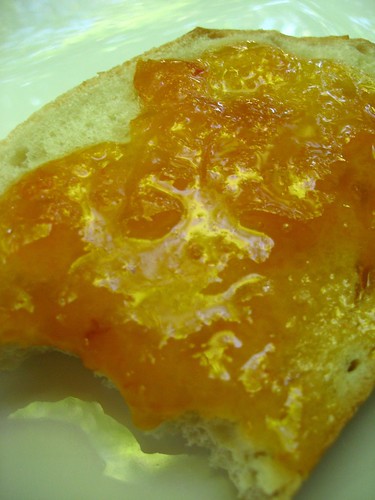
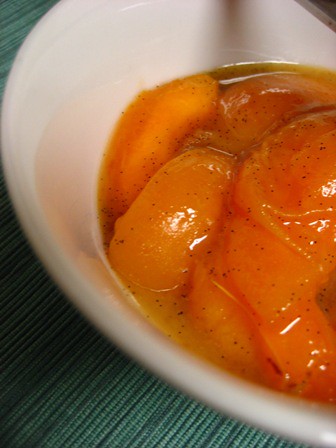
Ah, but by now you are wondering what the jam tastes like? It is superb. The sugar from the tinned apricots really gave it a nice flavor. The Riesling adds a different layer of sweetness, one more clear and sharp, plus a slight spiciness. Lastly I put the kernels from the apricots pits in the jars to lend a slight almond profile to the jams. Delicious.
This is also a post to bring to your attention a little announcement. I have started a new blog entitled "
The Rhetoric of Rhubarb." This blog will focus on my research which is often an intersection of food, psychology, sociology, literature, rhetoric and history I'll be doing in my grad program. An academic food blog of sorts. It'll be updated every Monday. If you want a bit of mental and analytical exercise I hope you'll hop on over and follow; I am encouraging debate, critique, questions and insights. It still needs some new paint and some styling, so be kind in its Version 1.0 phase.
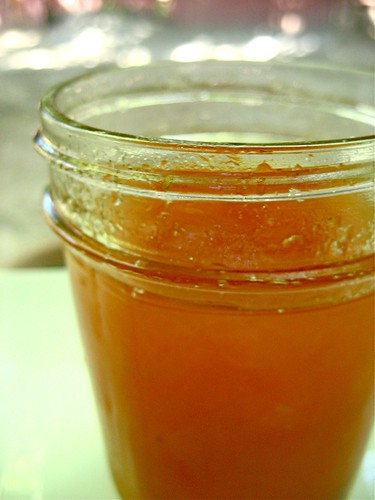 Hemingway Inspired Apricot and Riesling Jam
4 cups of diced apricots
1 cup of canned apricots, (this should be an entire 15oz can, well drained)
2 + 3/4 cups of sugar
1/4 cup + 1 tablespoon of Riesling
5 tablespoons of lemon juice
apricot kernels (optional)
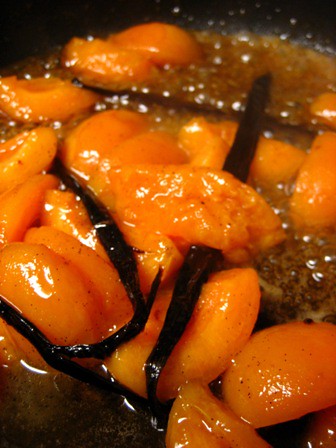
1. Place the apricots, canned apricots, lemon juice, sugar, and Riesling in a stainless steel pot with high sides. Bring to a boil over medium heat. Cook for 25-30 minutes, stirring occasionally.
2. If you want to use the kernels, take the pits outside and pop them on the concrete. Smack them firm and lightly with a hammer and extract the kernel. You may crush the first few but you'll figure it out quickly.
3. Pour into sterilized jars leaving 1/4 inch of head space. Wipe the rims with a wet tea towel. Place the lid on and screw on securing ring. Work quickly.
4. Wait for the tops to pop in creating a vacuum seal. Store in a cool place and eat within 3 months.