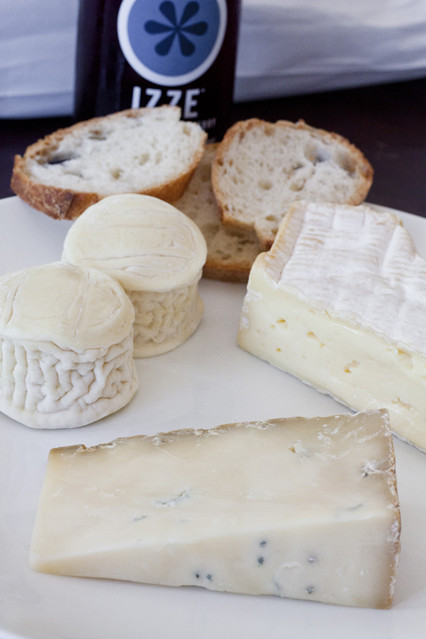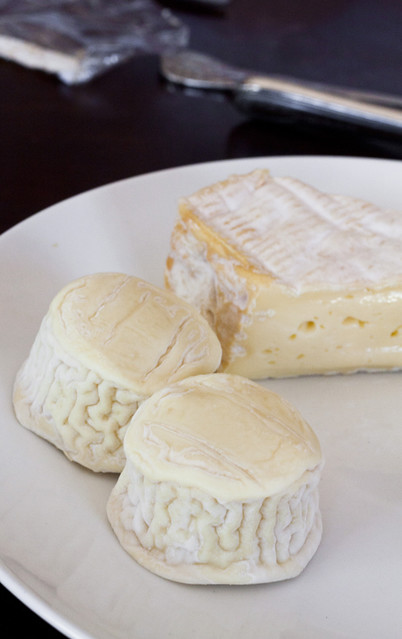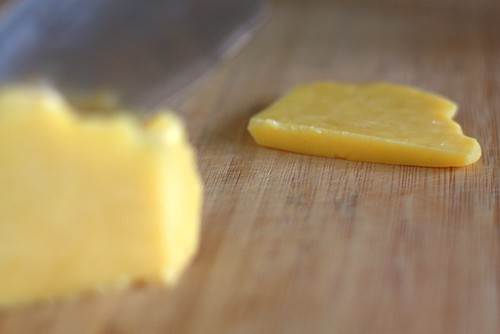
Fever: Summer Cheese Plate

Tuesday, August 2, 2011

-Perfect when you're healthy, not so when you're sick. I wish, for your benefit, that you are currently the former.-

So there are a few things I hate about being sick. The first is that sickness always seems to happen when your husband, wife, partner, boyfriend, mom, whomever that person in your life is who is by nature of your relationship the designated person to love and care for you when you're a hot mess of viral plague is out of town. It's always a conference, work, family thing that takes them away from your bedside leaving you to stew in your piles of used tissues and to hack phlegm across the stove top as you warm up your canned soup.

As I sat groaning in bed I muddled this thought in my congested head. Once again, BF was away and I was sick. Even worse, I was homeless as my apartment - once thought to be fixed from the water leak - was now a hotbed of mold and remnant water vapor. Furthermore, I was unable to move due to being trapped in a lease with a bullheaded witch of an apartment manager whom the universe had - for some unforeseen reason - not yet seen fit to drop a house upon.

BF was away in Dublin, California, a forgotten armpit of the state that no one has ever heard of. Its location being so far away and so secluded from modern civilization the United States has of course seen fit to put a training base for the army there and bring in BF to learn how to set up the plumbing for a field hospital because, you know, why not?

-He also knows how to set up air conditioning, which will be handy when he has all that government cheese on hand.-

Lucky for me, I have friends who care and who live nearby. The bed I was groaning in was not my own but was that of my friend, Elise Bauer. My personal Florence Nightingale. Her home was once again my halfway house after a disaster.

Even more lucky, she and her charming boyfriend, Guy, a renaissance Frenchmen who knows everything from rental law to how to fix a an old shower head, were kindly keeping an eye on me. Elise comforted me with tea and clean, cotton sheets of a thread count higher than my rent. Guy kept me laughing and roasted marble potatoes and tomatoes into a simple, filling, but easy on the stomach meal.

As I sat in bed watching every episode of My Little Pony: Friendship is Magic (which, by the way, is an outstanding show to watch in a fever haze) and coughing up my ribcage whole they spent some of their time picking up homeopathic medicines and whipping up batches of pancakes for me to eat to gain some strength back.

I am truly blessed.

-Guy also encouraged that the French drink a lot to help ease sickness. I think the French are probably on to something with prescribing a shot of brandy to help your sinus headache.-

Now, the other thing I hate about being sick is that I generally can't eat dairy. At all. It just churns my stomach. Yogurt, ice cream, quark, or cheese; it all just makes me want to hurl like a runway model after she eats a potato chip.

Something Different: Pairing Blood Oranges and Cheese

Tuesday, January 18, 2011

-I apologize but licking your screen will not stop the cravings. Please stop doing that.-

It had sat there, almost begrudgingly, in its small plastic container for nearly three weeks which is almost 3 years in cheese years. It had been the only survivor from a small Christmas brunch and while I had meant to attend to it the poor cheese always seem to bear the brunt of my schedule and timing. So now it sat in the corner hidden slightly behind the carton of 2% milk. It was so far back it even peeked over the jar of preserved walnuts, which is a sure sign of neglect in my fridge.

I hadn't necessarily meant for this to happen to the cheese. Just like many of my friends who I never seem to make enough time for it just never to seem to properly fit into my dinner plans or social schedule (or lack thereof). The tiny nub wasn't enough to throw into a pot of macaroni and cheese and by the time I finished cleaning the dishes from the leek gratin is when inspiration for a gratin with blue cheese struck an hour too late. Oh, and it would have been perfect in that wheat berry salad with dried apricots, but I was making it for eight people. What I would give for culinary powers of Jesus to feed the masses on mere crumbs, or to, at least, be able to spread this humble chunk of cheese a little thinner.

It happens all the time though, neglecting food. You might think it difficult for BF and me. Our weekly shopping budget is about $22 a week not including the occasional dry and canned goods run. We spend it smartly at the Farmers' Market picking up produce, eggs, and bread. We often come home with plenty of food, yet, more often than not we can't seem to eat it all.

We cook every day being sure to make plenty for leftovers for lunch the next day. We have friends over for meals, and I usually end up feeding Roommate and his BF should they be here. The occasional impromptu dinner party seems to occur every so often as well, which allows me to revel in the comfort and friends and whip up a last minute dessert that thankfully uses up some more of that fruit we bring home or are constantly gifted by friends with trees.

Yet, we have so much left over somehow. Greens go as limp as dozy cats, their rigid fibers sapped of all strength and left with the tactile texture of slightly damp silk. Carrots lose their backbone and bend to anyone's will. And celery? Well, its snappy personality becomes sickly. More than once has the bread gone moldy to the point that it looks like a mighty fine cheese as opposed to a hearty sourdough. Milk goes chunky and buttermilk goes rancid (yes, it is possible).
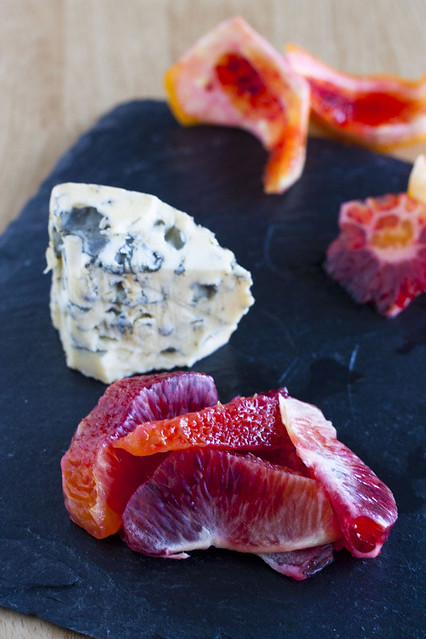
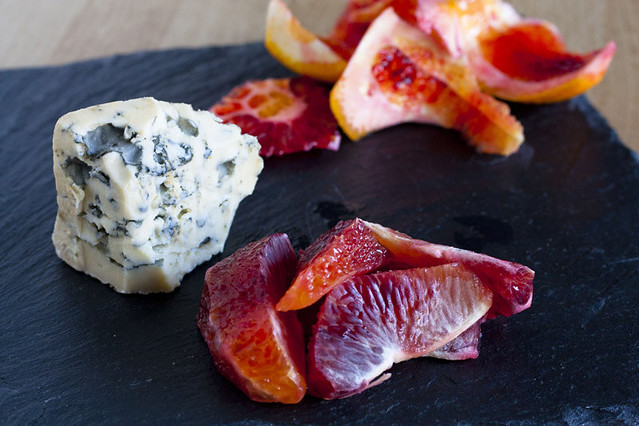
-Blue cheese and blood oranges... who would have thought?-

Still, this cheese had seemed to live. I pulled it out and inspected it through the foggy plastic. No growth, well, none unwanted at least. Blue cheese grows more distinct with age as the flavors ripen and the culture spreads and intensifies. However, fuzzy or oddly colored blue cheese is a sure sign of spoilage. Strangely enough a month in the back of the fridge produced no obvious visual discouragement.

I popped the top and expected a wave of rotten odor to wash over me smelling like a middle school gym locker room and the poor choices you made in it. Instead, the smell was pert and alive with the scent of wet hay, nettles, and cream. It was reminiscent of a rainy day on a dairy farm whose buildings are crept over dust and clover.

This blue cheese, a Fourme d'Ambert, one of France's oldest cheeses (made as far back as the rule of the Roman Empire) and AOC protected, is a classic end-of-the-meal blue often eaten with dessert wines such as a sweet Sauternes.

When it had first arrived for the brunch weeks ago it was still young. Age had given it body and character. Overall, it was creamy and slightly nutty with a salty twang that vibrated through your tongue as if someone had plucked a string on a guitar. This cheese was vibrant and strong.

As amazing as it tasted I still wasn't sure what to do with it. Not enough pasta for mac and cheese. Honey seemed too simple. No crackers in sight. Damned if I wasn't out of wine yet again in order to make a good pairing.
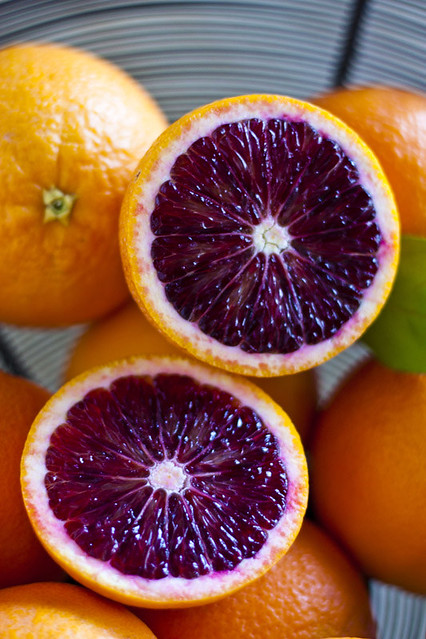
-Moro blood oranges are just plain prettier than other oranges.-

Then the fruit bowl filled with dark skinned Moro blood oranges caught my eye. "Citrus and cheese..." I pondered. "That's a thought." I knew that marmalades were a popular option with blue cheeses but I never gave much attention to the idea of pairing fresh citrus with cheese. Generally, I've always believed the whole lactic acid / citric acid combo always leads to an upset stomach, but I figured that there surely wasn't any harm in trying.

I segmented the orange and placed the supremes on a piece of slate with the cheese. A nibble of both and suddenly each revealed its secrets to me. The sweet, burgundy juices from the Moros tempered the salt of the blue, while the blue's cream accentuated the Moro's often underwhelming sourness into something perky and candy-like. I had stumbled onto one of those perfect cheese matchings made in Heaven.

A whole different world of cheese pairings seemed to open up. I ran to the fridge for some goat cheese and smeared some over the tiny wedge of orange. The salt in a creamy goat cheese caprichio polished the sugars in the blood oranges and made them shine and, unlike with the d'Ambert, the citric acid was given the fortitude to cut through the fat in the cheese creating a uniquely different experience.

Invigorated by the rush of new possibilities with these ruby-hued oranges I went to the store in search of a interesting, Brie-ish cheese. I was wholly convinced that the blood oranges and a semi-soft cheese would be absolutely bangin'. However, I wanted to find something not so salty either as a traditional Brie might be.
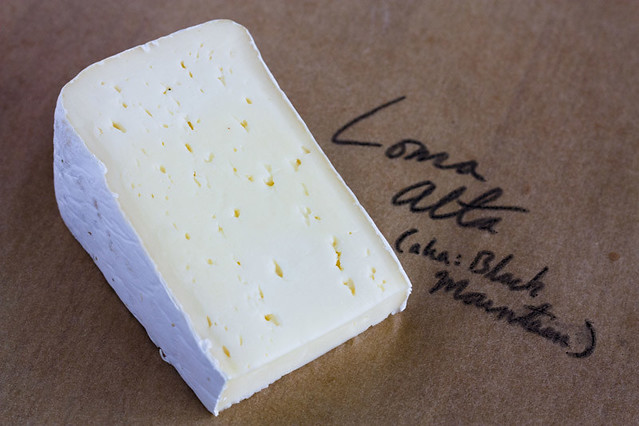
-Loma Alta cheese is like a firm Brie.-

You see, BF got me some pink Himalayan salt blocks for Christmas. The blocks are carved from boulders of salt quarried in Pakistan and run a number of lovely shades from cherry blossom pink to moody garnet. When food is laid down on the block it cures and picks up a delicate flavor of salt that pronounced and a skosh minerally. Furthermore, in regards to photography, I was convinced that the blood oranges and cream colored cheese would look stunning against the pink stone.

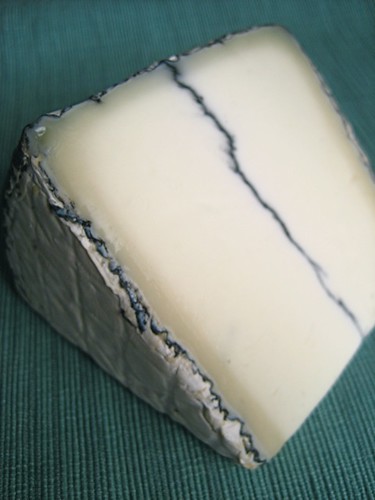
I picked up a wedge of Loma Alta, otherwise known as Black Mountain. Loma Alta is a semi-firm, organic cheese made from cow's milk. It's produced by Nicasio Valley Cheese Company in California. The taste is somewhat like that of an everyday Brie but not as oozy and less salty. It's a buttery cheese that stands up to brusque pairings.

I peeled and sliced a Moro and carefully laid down the slices on the block for about a minute (allowing any wet food to cure on the block for too long is a sure way to ruin your food as it simply absorbs far too much salt). The cheese, which I gathered would cure more slowly, had already been sitting on the salt block for about five minutes.

A slice of salt cured orange was almost enough to make me gag. Thinking to myself that this was a failed experiment I took the oranges to the garbage disposal. I stopped halfway to the kitchen though, "I suppose..." I mumbled to myself before turning around. I popped one of the orange slices in my mouth and winced as the salt assaulted my tongue, as quick as I could I threw a slice of cheese in my mouth and, as if someone had opened the windows to a stuffy room and let the air rush in, there was refreshing calm. The cheese provided balance. The Loma Alta sang with the salt and created a mellow pairing with the orange that was soft and simple. Even the cheese by itself, having cured on the salt block was not longer a simple semi-firm Brie, but now a complex creature full of nuance and rich, fruity flavors.
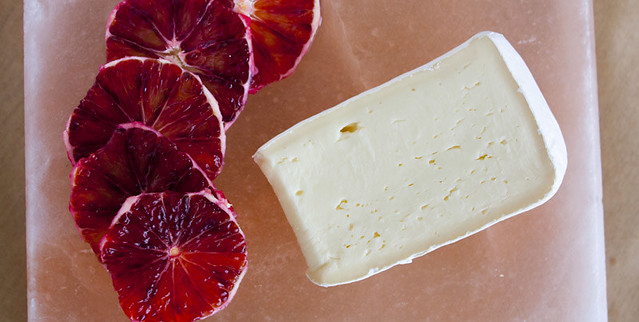
-Salt: Making everything better since forever.-

It seems that blood oranges had found a place of permanency on my cheese plates from this point on. Anyone I've presented these pairings to seems to agree, especially where the blue cheese is concerned. It was an unexpected discovery to say the least but certainly a pleasant one. The pairings themselves have lead to enticing new recipe ideas. I've now been eating salads composed of blood oranges and roasted beets with a bit of blue cheese or chèvre scattered about the plate for good measure. Hot toast smeared with Brie and topped with marmalade or slices of blood orange and a flurry of kosher salt is an epic appetizer for any meal.

The lesson, if there is one, is to always look around and see what works. If you have any leftover cheese in your fridge explore your pantry and fruit bowl. Open that jar of Nutella, get out the honey, whip out the celery and see just what works. You might be surprised by something different.

-If you cannot find blood oranges then any other good juice orange would be just fine too.-

Cheese Profile: Fresh, Soft Parmesan

Monday, October 4, 2010

-Hard to find, but worth the search.-

I couldn't help but perk my ears up when I overheard Jackie, the pastry assistant at Grange, talking to one of the restaurants purveyors. Our egg guy was going on about some of the dairy cows they had at his farm in Yolo county. While Grange didn't purchase any of his dairy products many other high-end restaurants in Sacramento did; most often, his amazingly grassy tasting butter. However, this conversation was more about his cheeses.

He regularly sent some of his milk to local cheesemakers who processed in into a variety of cheeses. Nothing for commercial purposes, but rather small batches for himself and his family and friends. He most often commissioned mozzarella, ricotta, and even a few cheddar-like cheeses to be made. However, what he had brought today for us to try was his soft Parmesan.

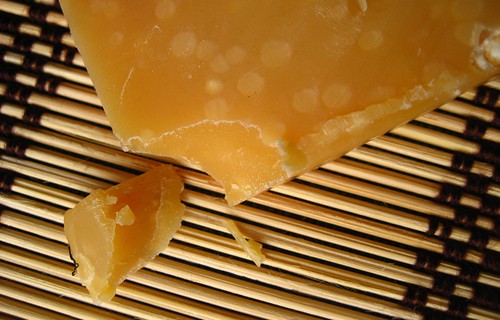
I use the term Parmesan loosely, and only because it was the reference term used by the farmer. However, it's more than accurate. The dairy is treated exactly like a traditional batch of Parmesan up to a certain point. It's never poured into a ring mold or graded, but rather after a short press and a tiny bit of aging it's served right away as a misshapen, butter-colored glob of cheese.

-A cheese with various properties from Parmesan, Gouda, and Cheddar. Truly delightful.-

It has flavors similar to a very mellow cheddar cheese that at first made me question why he wouldn't call it that. However, the slight, nutty resemblance of Parmesan begins to slowly roll across your tongue like a morning fog. And, just like fog, you can't pin the flavors down. It's a phantasm Parmesan, there for just a moment at the corner of your tongue and just when you think you caught it, it vanishes. The texture is somewhat Gouda-esque, which sounds like a term from a philosophy class, but accurately describes its slightly firm body.

Sadly, there's no way to actually buy this at the store. You have to know a guy, though maybe a chatting with your local cheesemonger or visiting a dairy farm will result in your procuring some. However, doing so will score you some truly unique and delectable cheese.

-It melts deliciously, too.-
Armenian Preserved Walnuts

Wednesday, September 15, 2010

-An Armenian treat that pairs perfectly with earthy cheeses or your favorite blue.-

Some of the fun in putting together a cheese plate is designing the pairings. Sometimes it's easy to do as any cheese book will tell you what wines to use, and will likely offer the tired old suggestion of putting out dried fruit or nuts. These cheese accouterments are overused and stagnant, like boxes of old clothes in the attic your parents used to wear thirty years ago. Yes, it was cool back then and might be nifty for a party, but lets just retire them. And not to knock the honey-blue cheese pairing but, God, can we find something else? Can we? (I did. Try sprinkling a bit of saba - a syrup created from grape must - over it. Outrageously good.)

Recently, I was turned onto something delightfully new by my friend Kirsten over at the blog, It's Not You, It's Brie: preserved walnuts.

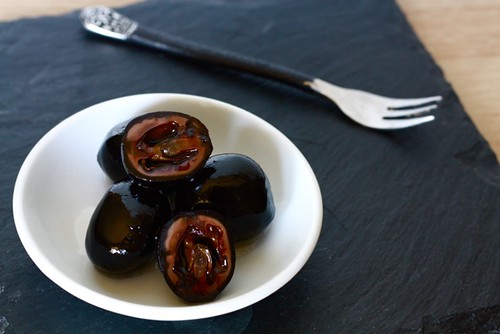
Preserved walnuts are an Armenian delicacy that are just now making their way to the U.S. hardcore foodie mainstream (it's a very small stream, more like a maincreek behind your aunt's house in the country). The walnuts are picked young, very young. Younger than when you would pick them for Nocino. They're picked when the shells are still quite soft and have the texture mature walnut, and baby walnut inside is soft and mellow. They're then packed in sugar, water, and lemon juice and set to preserve for a very long time.

-Hmm, a new home preserving project? I think so.-

The result are small, ebony spheres of intrigue. They have the taste of a walnut, but softer, sweeter, and more velvety. Not nearly as earthy but with a flavor that can only be described as woodsy. It's the sort of dessert you might picture out of a fairy tale. While it looks like a dessert of the evil stepmother, it's a delicacy fit for a fairy godmother.

The preserving syrup is epic on it's own merits. My future plans involve dripping some over a blue cheesecake or a walnut tart. I can only imagine what a skilled mixologist would do with it; I imagine a dash of the syrup with some chocolate liquor would be phenomenal.

I plan to serve these delightful little walnuts with some aged Dry Jack cheese, a cheese known for its walnut profile; and alongside some Oregonzola, in lieu of honey. The sweet and nutty flavors should shine well against the sting of a blue cheese and snuggle up nicely to any nutty cheeses, like Comté or Jack.

Cheese Profile: Barely Buzzed

Tuesday, September 7, 2010

-Maybe it's time to do a coffee and cheese pairing post?-

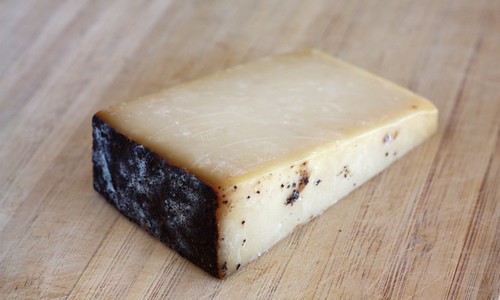
Every once in a while you encounter one of those foods that sounds so bizarre that you just have to try it. When my cheesemonger friend, Felicia, told me about Barely Buzzed that was my reaction. A Cheddar-like cheese rubbed with coffee and lavender? How intriguing! How odd! I knew I had to get my hands on some.

Barely Buzzed is produced by the Beehive Cheese Company, a group of artisan cheesemakers in Utah who left the corporate world in order to make radical new cheeses. Barely Buzzed, one of their signature cheeses, owes its unique flavor profile to its one of a kind rub which is composed of South American, Central American, and Indonesian beans roasted to different styles and then ground up with French lavender buds creating a powerful and international spice blend. This blend is mixed with a bit of oil and then hard-rubbed into the cheese wheels, which are then aged on planks of Utah Blue Spruce. (In the end, you're eating a piece of cheese that's been seemingly influenced by various culinary traditions and ingredients worldwide.)

The resulting flavor delicately permeates the cheese making it nutty and floral. Closer to the rind notes of butterscotch and caramel become more intense. The overall flavor is somewhat like a Cheddar, but more reserved and not quite the umami bomb you expect from a well-aged Cheddar.

Personally, I find that the best cuts of this cheese are the ones that pick up small flecks of the rind's rub. Only then can you really appreciate the thought that goes into the development of this cheese. It becomes savory, deep, and mouthwatering like biting into a piece of beef that's been sitting in a slow cooker for the last ten hours.

In addition, this is one of those rare cheeses that actually pairs well with dark roasted coffee; simply eat it with a fork on maybe on some toasts of rye or dark wheat. The cream and caramel flavors of the cheese compliment the bold roasted taste of coffee resulting in a perfect breakfast cheese outside the general cream cheese rotation.

I encourage you to find a wedge of this for snacking or as a wild card curd for your next cheese plate. You'll find it quite addictive, though that might partially be the coffee-rind talking.

-Coffee and lavender. Who ever would have guessed?-

Cheese Profile: Dill Havarti

Wednesday, August 18, 2010

-Dill makes everything better. This includes Danish cheeses.-

When I'm sick I rarely ever eat anything other than juice, water, and chicken broth. If I have to eat something, it'll usually be fruit or lightly sauteed vegetables. Meats, grains, and dairy weigh me down and make me feel like my body has to spend extra energy breaking that food down. Energy that would best be spent healing from sickness and exhaustion.

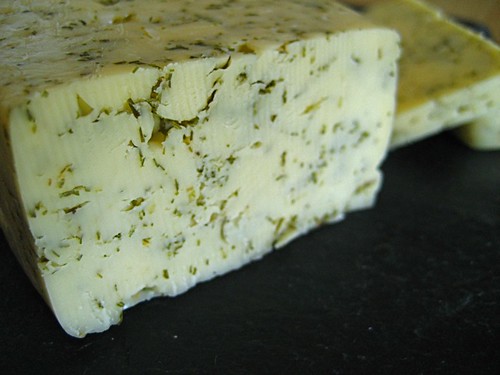
Still, after a bowlful of blackberries or your sixth plum all that sticky sweet juice and tart skin gets a bit weary. It's usually then I decide it would be a good time to break open that little tupperware that's been sitting in the back of the fridge. Inside it, wrapped in paper, is a wedge of Havarti heavily flecked with dill. I'd been keeping it around to let it age a bit, which lends it a slight hazelnut flavor; however, in this case, delayed gratification be damned. I was tired, cranky, and hungry.

Cutting into it I noticed the irregular holes and the verdant shag as flecks of drab green dill fronds flare out. The smell is fresh and intense, even slightly mentholated. Something, finally, to wake me up from my sickly stupor.

Biting into a piece banishes all the sugar and acid from the fruit and replaces it with a fatter flavor. Dill Havarti is indeed sweet in itself, barely lactic, and tastes of butter, butter, and more butter. not the kind that comes to you in a stick but butter that's been recently whipped from raw, heavy cream.

-Havarti with dill is a fantastic cheese that pairs well on any cheese plate, matches many wines, and works well in many sandwiches and salads.-

The dill imparts its flavor throughout. The presence of certain molecular compounds such as apiole and carvone - these are responsible for the flavors of parsley and caraway, respectively - are abundant in dill and thus lend the cheese a very green taste. Slightly warming, slightly bitter, the dill contrasts against the fat and salt of the cheese and gives it layers of intensity much like a well composed salad where you're able to taste every intriguing ingredient in one bite.

Truth be told I was eager to get out a skillet and whip some of it into a quick grilled cheese. However, I was more eager to crawl back into bed before my next coughing fit. I sliced off another chunk of cheese, grabbed a dill pickle (I like to layer similar flavors) and snatched a few blackberries. I wasn't sure if the meal was provincial or slightly hobo/college student-esque in its whatever's-in-reach composition, but it suited me fine regardless.

Dill Havarti is a unique cheese if anything. It pairs well with things it probably shouldn't. From raspberries to lamb it possesses a wide range of flavors and tastes that make it compatible with many foods, so regardless if you're sick of other cheeses or just plain sick it will match whatever meal you're able to throw together.

-A cheese that's shaggier than your grandma's outdated carpet.-

Cheese Profile: Brillat-Savarin

Wednesday, July 14, 2010

-Sour, lactic, and smooth.-

I'm going to display a bit of my ineptitude when it comes to some aspects of food history but I know very little about Jean Anthelme Brillat-Savarin aside from his famous quote, "Tell me what you eat, and I will tell you what you are." I did my best to read The Physiology of Taste for my thesis, but in all honesty that book is dryer than burnt toast. I also hear we was a big proponent of capital punishment which isn't so nifty either. Overall, not a guy I'm overly invested in. However, he did know how to make a quote with staying power. Aside from the now Iron Chef famous one he has one other I'm particularly fond of; "A dessert without cheese is like a beautiful woman with one eye."

Ignoring the sexism and ableism (another reason not to really dig him too much) he makes a valid point. Dessert without cheese is like a good novel with the last page ripped out, horrifying and epically disappointing. I guess between this quote and the headway he made in the world validating the appreciation of good food and his waxing aphorism is why the famous maître fromager Henri Androuët named this cheese after him.

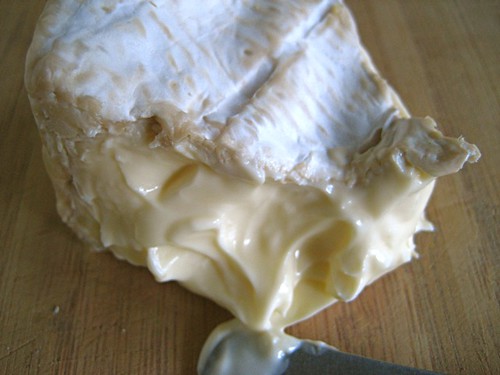
The cheese Brillat-Savarin hails from Normandy and is the descendent of a cheese called Magnum which is no longer made as the cheese maker who created it closed shop in the seventies. It's a super soft, triple cream Brie with a runny consistency that spreads like warm butter and tastes like it too. The white bloomy rind comes from whole milk being treated with Penicillium candidum which is the culture that also results in that delicious butter flavor. Mmm... butter.

-Runny deliciousness.-

Oh, yes. Did I mention the butter flavor? Yes, it tastes like butter. Anyone lucky enough to have a butter-like cheese named after them obviously did some good in the world. The cheese is soft and silky and melts across your tongue just like, yes, butter, dripping over a slice of warmed baguette.

At first taste you might find it incredibly salty but after a minute you realize that the salt-taste is somewhat sour and biting which is this cheese's characteristic lactic flavor which is highly pronounced. It isn't a whisper in the slightest but rather a banshee with a megaphone singing death metal. This is accompanied by an quieter earthy mushroom taste. All this conversation is controlled by this cheese's talk of butter.

It belongs on any dessert plate and is best paired with rich fruits such as dates and prunes or sweet Asian pears. However, when it comes to wine Brillat-Savarin has always been finicky, too salty for reds and far too creamy for whites; cheese author Patricia Michelson suggests a blonde beer and I agree.

Jean may have been a bit of a death-encouraging blowhard (seriously, read his book) but one cannot deny the man had a good point about cheese. His spoiled namesake is a prime example of this and any dessert or cheese plate without this delightful Brie would be an ugly thing indeed.

-I highly doubt that Mr. B-S was as intriguing as all this.-

Cheese Profile: Cotswold

Sunday, June 13, 2010

-The underappreciated Cotswold. Also, I love this picture. It looks so 1970.-

Cotswold gets the shaft a lot of the time. It's the red-headed stepchild of the cheese world, acknowledged but only begrudgingly so. And that kinda pisses me off.

None of the great cheese books out there will ever list Cotswold off as a cheese you have to try, or would even deign to group it with other, often considered more remarkable cheeses like Seastack or Vacherin. To do so would be to many a cheese-snob a travesty.

Still, this popular cheese is well known and quite renowned. Practically every child, foodie, and housewife has tried this cheese at one time or another. Perhaps at a potluck or some party or work function. Indeed, my first taste was at an art gallery opening where I instantly fell in love and nearly demolished the entire Cotswold spread in under a minute. Only public decorum and the total embarrassment I suffered when a friend told me to "Slow the fuck down on the cheese," loud enough so that people stared at me did I actually stop.

And, I think, that's why it has developed such a low sense of value in the food world. It's too well known. There's no mystery. It hasn't been banned from import or export. There's no great legend or history behind it (it is, however, a very old English cheese from Gloucestershire County). It's been served in English pubs for as long as anyone can remember. It's tried and true with nothing surprising about it.

The food world needs to come back to this cheese with fresh eyes. Really experience it one on one. Not on a plate next to the cold cuts and celery sticks. Go out, buy some - you can find it at any store - and put it on a plate. Bring it to room temperature and sit in a quite corner where you and Cotswold can have a heart to heart.

-Chives make cheese better.-

The look is somewhat debonair, proper in its well color coordinated body. Inviting, rustic, and simple. Notice its aroma, it smells green and fresh like childhood games played in the yard. It isn't like one expects cheese to be, especially one flavored with chives, pungent and harsh. Rather, Cotswold is sort of welcoming and invites you to have a good, light beer as you eat it.

The texture, similar to a young Cheddar, it quite creamy even for a semi-firm cheese. After a moment or two in your mouth it begins to break down to your body temperature and melt apart. Grassy, smooth, garlicky and green due to the chives it possesses a very twee brightness; but it's that innocent flavor that belies a more prurient quality. It instills a dairy-lust where you'll go back to the fridge to snack again and again on this delightful cheese that you had before cast aside.

I've been reacquainting myself with Cotswold (I even love the name! Cotswold; so refined!) in cooking. Layered in a grilled cheese with garlic rubbed rye or sourdough and layered with a bit of fresh basil. Melted with a bit of leftover skirt steak into a sandwich. Freshly grated over mashed turnips. Its herbaceous and soft qualities make it perfect for pub and cafe food.

Cheese Profile: Green Peppercorn Goat Capricho

Saturday, May 22, 2010

-Capricho is one of the cheeses that's all the sudden becoming hip and cool. You want to be cool, right?-

"Ooh, I'm going to pick this one! It kinda matches the colors of the walls in the living room."

BF looked at me, smiled and shrugged, "Guess it's as good a reason as any."

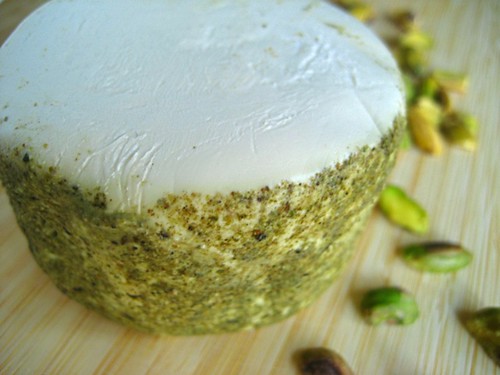
Yes, I chose this cheese because of its grassy, pea green color. And it does match my lemongrass painted walls. It might be one of the sillier reasons to select a cheese. Heck, I didn't even try it first, it was totally impulsive, but lucky for me this Scovillesque cheese is delightful, both as a snack or on any cheese plate. It was a reason that ended up being appropriate enough to acquire a winning cheese.

-Yes, do serve it with pistachios and a dry white wine. You'll thank me later.-

Capricho usually refers to a type of Spanish cheese, most often made from goat milk, that's been cured into snow white logs of silky cheese that's only slightly more solid than chevre. This particular one, imported by the European fine produce company, Mitica, is growing in popularity and has become one of the more fashionable cheeses due to its cool pistachio color and wide appealing palatability.

While most Capricho is plain this one's verdant hue is attributed to crushed green peppercorns. Green peppercorns are immature berries of black pepper that have been picked early and cured so they can retain their flavor and color. Often used for fish and poultry green peppercorns give this cheese a piquant, almost arugula-like aroma that swirls in with the faint, goaty musk creating an overall bright and green scent. It's astonishingly addictive and you may easily find yourself sniffing thus cheese for a good ten minutes as I did.

-Crushed green peppercorn crust.-

Green pepper is a bit hotter than black pepper so the cheese takes on a peppery fresh taste. The milk itself during its curing and acidification has become slightly salty, quite fatty (resulting in a dreamy mouthfeel), and soft in texture. I find it best to take a knife and blend and swirl the rind and body together in a bowl creating an appearance that reminds me of grass covered cliffs running through snowy peaks. This way when you spread it over bread or crackers you get the full taste of the cheese and peppercorns together for a burst of effervescent flavor. Wine wise, it works well with anything dry, though I find whites to be better over reds in this case.

If anything, it's a cheese that teaches you that impulse can be a good thing when it comes to food. It makes eating adventurous and you may well find yourself pleasantly surprised.

-I also pick my wines to match my throw pillows.-

Cutting the Cheese: Getting to Know Your Cheese Knives + Giveaway

Thursday, April 29, 2010

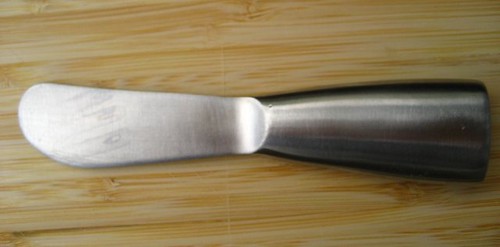
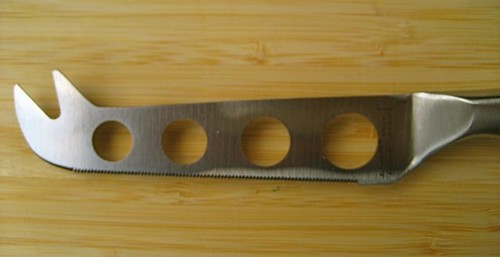
-Cutting the cheese has never been easier.-

I enjoy good cheese knives, they add style to any cheese plate and give your a guests a chance to use an intriguing and often endearingly new kitchen tool. Still, knowing what knife does what is key to figuring out what you plan to serve and how to best assist your guests in consuming the spoiled milky goodness served before them.


Soft Cheese Knife
The name of this cheese knife can be a bit misleading as it works wonderfully on soft, semi-soft, and some semi-hard cheeses as well. The design of the knife is created for maximum efficiency and little stress. The blade is extremely thin and often cut with wide holes to prevent the cheese from sticking. This allows the knife to easily slice through tacky and sticky soft cheeses like Camambert, Brie, almost all blue cheeses, and slightly firmer cheeses like Appenzeller. In a pinch it also does a fine job of cutting the rinds off of firm and hard cheeses. The tines at the end allow you to skewer and serve slices of cheese with deft precision.


Hard Cheese Knife
Stout and heavy for its size this knife is also known as a Parmesan knife. It's designed not for clean slices but cutting through the cracks and crystals of hard cheeses to wedge off snackable chunks. The knife has a reliable heft to it and encourages a bit of roughness when breaking apart a good wedge of Piave or Sea Hive.


Cheese Spreader
Overlooked and under-appreciated the cheese spreader is one I love for its simplicity in design and use. Those super runny cheeses like Epoisses, Robiola, and soft cheeses like Brillat-Savarin require a good cheese spreading knife. It easily controls and spreads softer cheeses across bread and crackers where other cheese knives would fail miserably. A butter knife is essentially the same thing, so if you have one you're good to go.


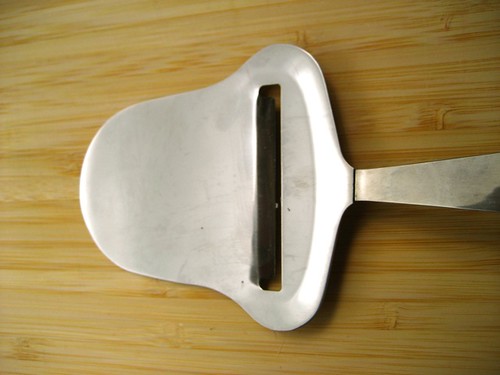
Cheese Plane
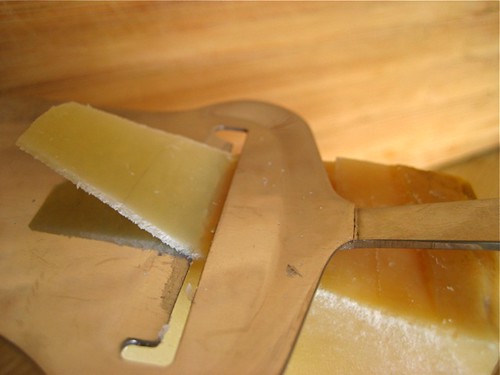
The most unique of the cheese knives, the cheese plane is great for creating thin, delicate slices of hard cheeses for cheese plates, sandwiches, and snacks. Whereas a hard cheese knife cuts off good snacking chunks, the plane creates perfect thin slices using a lowered micro-serrated blade. Look for one with a handle that won't slip out of your hand and a good thick blade that's well sharpened; be warned that a cheap one will go dull quickly. Perfect for Parmesan and Cheddars.

There are also cheese slicers which do a fine job of cutting apart cheese as well, but I find it's best to have one of those if you're only planning to serve lots of cheese a lot of the time. I consume a lot, but I have yet to find a real need for one (though sometimes I can see slicing clean wedges of Pecorino Romano much easier with it).

Of course, cheese knives aren't necessary or mandatory. They're tools that simply make cheese service easier for yourself and your guests, add aesthetic value, and are more fun to use than a regular knife. If you serve and eat a lot of cheese then it might give your cheese plates a little extra flair and set you apart as a dedicated student to the art of cheese.

Knowing the fun of having a wicked cheese knife I can't not give the rest of you the opportunity to have a great knife of your own. I'm offering one of Crate and Barrel's soft cheese knives to a lucky reader. It's a sharp blade with a stylish design and the one I use most often. To win, simply leave a comment about what cheese you would serve with it. Please, only one comment per person. No shipping outside of the United States. Contest ends on May 4th and the winner will be announced on May 5th.

Cheese Profile: Mimolette

Thursday, April 22, 2010

-This cheese takes names and shows you what she's made of.-

Mimolette will never be queen of the prom. It is content to be a runner-up to the ever more loved Parmesan who, you just know, will win the popular vote. Still, it takes pride in the honor of being nominated. It shows that sweet Mimolette did something right to get there.

The thing is you can't compare Mimolette to Parmesan as so many are wont to do. Often people pass it off as an cadmium-colored copy that looks more like a stunted cantaloupe than a good cheese. I can't lie to you, when you compare it to Parmesan it's no match in the creamy and nutty departments. No contest.

But that's the thing; Mimiolette isn't Parmesan. It's Mimolette, a traditional French cheese that most often originates from the city of Lille. You have to judge it on its own merits.

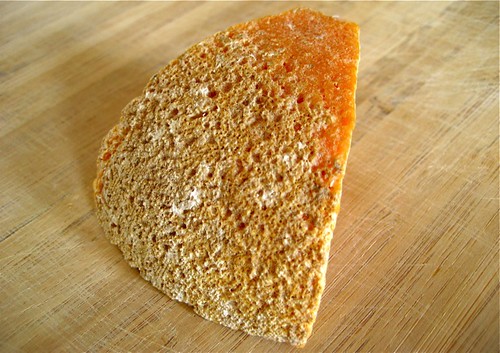
The bright orange color comes from the addition of annatto giving the cheese spicy notes reminiscent of nutmeg and pepper. The flavor becomes bolder and evolves with age by sweetly adopting hazelnut flavors. Oily, strong, and salty it gains respect for what is it. A cheese with flash and bang. Who cares if Mimolette isn't prom queen on prom night? She leaves the room standing tall, and as time goes by she garners admiration by her own merits.

The moonscape rind, one of its most distinguishing and charming features, is actually caused by cheese mites. Intentionally added as they aerate the cheese and help it develop it's robust savory flavor. How many cheeses can boast that?

Mimolette is a strong-arm flavor that can make any mac-n-cheese dish become a savory bomb to unsuspecting diners. Furthermore, it's a cheese that has the ability to match up perfectly with hoppy, amber colored beers.

So give Mimolette a hand, take her for a twirl, you may just end up voting for the underdog in this race.

-Cheese mite nibbled for your enjoyment.-

Cheese Profile: Taleggio (Plus Recipe)

Wednesday, March 31, 2010

-The rosey-orange colored rind makes it easy to identify. Of course, the label helps too.-
The rosy-rinded Taleggio is one of the most known of the stinky cheeses. Yet don't let this cheese's washed rind rondo turn you away; while the smell may be overpowering with a somewhat sweaty, surely surly smell the taste is tangy, meaty, and finishes fruity. This rounded flavor pairs well with caramelized onions, apples, cured meats, and strong mustards.

-It may not look like much, but the flavor and smell is crazy intense.-
The cheese gains its flavor and appearance by being set on wood shelves for six to ten weeks, and washed with a seawater sponge to prevent infection from unwanted molds. Developed in the Valtaleggio region in northern Italy, near Lombardy from where it gets its name Taleggio's addictive flavor has made it one of the most popular semi-soft cheeses worldwide.

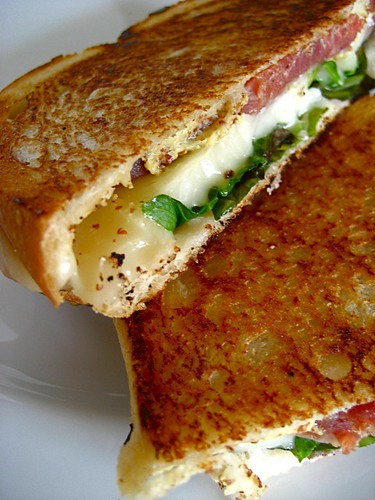
While delicious on crusty bread I love it melted into a grilled cheese paired with speck (a juniper-flavored ham with slightly coniferous flavors), and strong mustard.

-Probably one of the tastiest grilled cheeses I've had in a long while.-

Grilled Cheese with Taleggio and Speck

sourdough bread
coarse grain mustard
4 thick slices of speck, diced (optionally, use proscuitto or ham)
6 ounces of Taleggio, sliced and rinds discarded
various mixed greens of your choice
olive oil

1. Lightly spread mustard over slices of bread. Sprinkle in the diced speck and gently layer on the mixed greens. Top with another slice of bread.

2. Lightly grease skillet and place over medium heat. Brush the outside of the sandwiches with olive oil. Place in the skillet and press down using a spatula and cook until crisp and golden. After about a minute flip the sandwich, press and cook for another minute until golden.

3. Cut in half and serve immediately.

-A salty and spicy sandwich with melty cheese.-

Cheese Profile: Humboldt Fog

Wednesday, March 24, 2010

-Tastes like way back when.-

This post begins with an apology to mom. Mom, I'm sorry for every single grass stain I ever put in my clothes as a child. Those things can be more stubborn than what my eating habits were during the age I was rubbing in all that green. Verdant evidence that my recesses were, indeed, well spent.

However, at the age of 26 and while soaking a good t-shirt and Express jeans in the sink I have a new found anathema for the laundry drudgery kids must put their parents through. This experience I blame on Mary Keehn, the owner of Cypress Grove Chevre. Yes, Mary, we may never have met before, but you and your Humboldt Fog are to blame for these grass stains.

Now, there are a lot of good goat cheeses out there but Humboldt Fog is generally recognized to be one of America's, if not the entire cheese world's, best. The powder-svelte mouthfeel of this chevre is light and creamy, even somewhat earthy.

A good cheese should reflect its sense of place; where it's grown and nurtured along. The pasture fed goats who roam Humboldt County in Northern California, an area rich in natural growth and sunshine. California's happy cows aren't nearly as happy as Humboldt goats.

The cheese is then aged, and, being flanked by the misting fog and salt of Pacific on one side, and musky, ancient redwoods on the other, the cheese absorbs these flavors. In addition, a fine layer of vegetable ash and salt running through the center and lightly coating the cheese gives it a unique and memorable appearance one might associate with rolling fog across a coastline.

-See? Rolling fog and coastline.-

As I bit into this cheese its cool and pleasant tang reminded me of foggy California mornings before school started. A huge grassy hill, the mountain-like kind most children dream about playing on and conquering as king, ran parallel to the all-purpose field. Those cold mornings with the grass still wet, friends and I would lay straight as logs to the slope and roll downhill screaming with joy as we bounced along at frightening speed. By the time we'd reach the bottom we'd be trying to catch our breath through the fits of laughter. Taking in gulps of air. Rubbing our grass-stained bruises.

This cheese reminds me of that cold, wet air we sucked in so greedily.

Biting into it took me back to easier times when finding a good hill was the best thing ever. As for why my clothes are stained and I hold Miss Keehn accountable?

Well, there happens to be a school with a really big hill by my house...

-Pairs well with crackers, on a salad, with white wine, and some stain remover.-

Cheese Profile: Saenkanter

Monday, March 15, 2010

-Saenkanter: A top-tier Gouda.-

Doctor, I swear I've put together better cheese plates before. I know the fact that most of my party guests' innards are more knotted than a preschooler's shoelaces says otherwise, but really, my cheese plate wasn't all that bad.

Yes, the homemade pickles may have caused a small case of botulism or two, but who doesn't take that gamble when eating a pickle? They're the roulette of the food world! And sure that one washed rind cheese may have been a bit off, the smell was epic but when it comes to runny, rank cheeses it's such a fine line between aged and apocalyptic.

But, Doc, seriously, you should have tried the Saenkanter. I mean, dang, can the Dutch make a good aged cow's milk cheese. Seriously, my guests were hitting that cheese so hard that if you pulled them off it you'd be crowned the king of England.

And who can blame them? That butterscotch color is so enticing, and the salty caramel flavor - oh my god - a dessert cheese like no other. Cocksure with the taste of salted caramel, it becomes a bit more cheeky when it's paired with dried blueberries or raisins. It's surprisingly flavorful for a pasteurized cheese, and a premier Gouda if I've ever tasted.

The texture is smooth and quite creamy for a hard cheese. It's nicely broken up by the little protein crystals, like little pin-prick fireworks popping in your mouth giving it a playful mouthfeel.

Well, doctor, when you try something like that, you'll be willing to risk anything else sitting on the cheese plate. Which is kinda why we're here now. I also served a blue cheese. Well, technically, it was a Brie. It was just the color blue. But mold is supposed to be good, right?

Right?

-Trust me, you'd eat poison if it was paired with this cheese.-

Cheese Profile: Rogue River Blue

Saturday, March 6, 2010

-Beware of unseen costs if you're accident prone.-

A good wedge of Rogue River Blue will cost you about $8 initially, but if you accidentally drop a crumb of it into a library book, then promptly forget about it, the replacement fee is extraordinary. That is, unless you're a good liar.

Which I'm not. I'm awful. I get visibly nervous stuttering to the point that would make a speech therapist cry, and my eyes roll so far into the side of my head that they might actually find a plausible fib written on my skull. My parents only had to give me the evil eye to make my will buckle as a child, and as an adult I'm not better.

I gave a sheepish "I don't know," and hoped. The librarian looked at me as her nose crinkled at the offending funk. "What really happened?" she asked, "What tiny creature did you execute in this book to raise such a stink?"

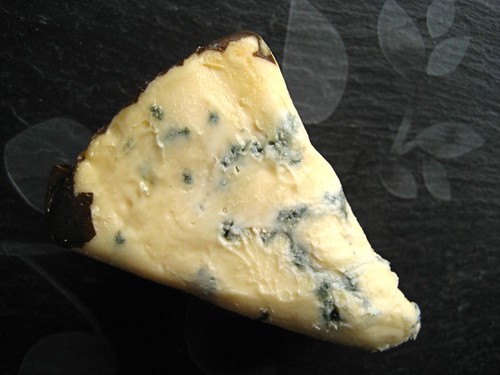
I explained that the stink wasn't always so rank, that before it belonged to one of the most delightfully complex blue cheeses. Heralding from Oregon this handcrafted cheese had a history as rich as its flavor. The raw cow's milk was carefully turned in caves resembling those in Roquefort, France. It was this dedicated method of cheese making that imparted the milk with those naturally occurring molds that embody Rogue River Valley's terroir.

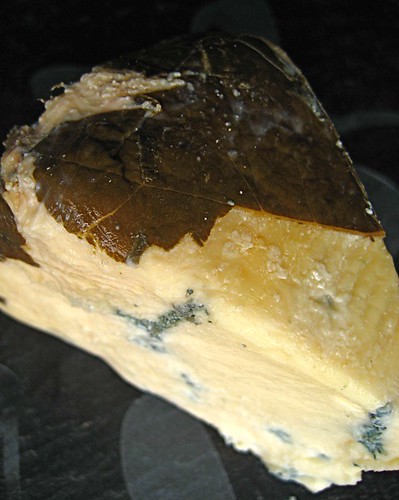
I said that she shouldn't judge a cheese based on a crumb wedged between the dense expounding of Brillat-Savarin, transformed by heat, pressure, and time into a dairy-mold bomb. A week ago this cheese was redolent with the scent of pears and apples as the cheese had been wrapped in grape leaves macerated in pear brandy, imbibing the cheese, making it sweet and drunk.

-Personally, I think leaving a piece of this in the pages of The Physiology of Taste makes perfect sense.-

Breaking it open, the butter-colored cream and blue ripple of mold released new scents of pine and morels which inevitably engulf you and the room it sits in. The smell might be off putting to some, but its convivial taste - spicy at the start and then creamy and whispering of asparagus - is endearing. Paired with honey it's enchanting.

I brought myself back from my cheesey reminiscence. The librarian smiled at me, she, apparently, had a fondness for Oregonzola. She shooed me along and told me not to worry, she understood. And next time, she suggested, I should use a cracker.

Cheese Profile: New Zealand Cheddar

Friday, February 26, 2010

-A charmer to be sure.-

Who wants to take home a B-List cheddar? When Fiscalini Bandage Cheddar or Reade's are so trendy no one wants to be seen with something from from nowhere, California; or worse, Kraft. (So D-List.)

It's obvious to see why the A-Listers in the cheddar world are such stars. Lincolnshire Poacher is meaty, it has cojones and can stand up to any food or drink you pair at it. Grafton, a popular Vermont cheddar, representin' the East Side of US cheddars, is smooth and a little bit sweet. Westcombe is tame and a tad bit floral, which makes it either the black sheep or white lamb of the cheddars (and either way you lean it's still tasty with a slice of apple).

Yet one has to give a little bit of attention to New Zealand cheddar. Flavorful and firm. A reliable cow's milk cheese. That's what this cheddar is: all-purpose cheddar.

Affordable, amenable, it's a good cheddar to take home to mom. Not so sharp that it'll scare her off like bringing home an ex-convict boyfriend named Tattoo, but not so mild that she'll politely excuse herself to commit suicide in the kitchen from boredom. New Zealand cheddar possesses a soft, but reserved, texture, and offers eyebrow-raising repartee at the dinner table.

And, oh my, it does love the table. Grilled cheese, gougères, fondu; it does it all and charms you with sultry looks and quick kisses when no one's looking.

It proves to you that it deserves equal treatment to the likes of A-List cheddars.

Move over Grafton, I'm taking New Zealand home with me.

-Tasty, delicious cheddar cheesy poofs.-

Cheese Profile: Cave Aged Swiss Gruyere

Wednesday, February 17, 2010

-"You may want to sit down for this."-

Dear John,

I'm sorry, but this isn't working out. We're not working out.

It hasn't felt right for a long time now, and I want to be fair to you and tell you the truth about how I feel. Dragging this out because I'm afraid of talking about it, or because I don't want to hurt your feelings would be the worst thing to do.

I guess I've been feeling this way for some time now. The signs have all been there and I guess I'm only confronting them now.

There was the time you asked me to trip a girl scout so you could help her up and score a box of free cookies. How you drunk dial my sister after too much wine, even though she's sitting at the same table right across from you. And the fact that I spend my Friday nights alone while you and the guys see how many Fritos you can fit in your nose is one thing, but while that was funny when we were in college, doing that at my grandmother's funeral 5 years later was simply embarrassing.

The passion is waning, unlike the taste of that cave aged Gruyere we tasted in the Swiss Alps when things were good. Its musky scent and creamy, ivory color were so reminiscent of the pure but animal attraction that once existed between us.

-"This turns me on. You do not."-

And while our love was once complex like that Gruyere's, owing to its use of raw sheep's milk, it's now flat and tepid. That cheese eclipsed "us" with deep toasted and meaty flavors. A tang that's more like a twang, a dialect that has passion and character like we once did when we whispered to each other in bed.

I want to be in a perfect pair the way that cheese was for those strong olives and fig jam we had when we stayed up late talking about our future. Now you don't even take my hand or listen to me. We're two separate people now rather than a unit like a couple should be.

I want a connection that pops like the lactic crystals embedded in that tightly bound and dense Gruyere. I want a relationship where we try new things like cave aged Gruyere grilled cheese sandwiches with caramelized onions and jam on sourdough bread; or making a fondue with the Gruyere mixed with some Emmenthaler, mustard, white wine, and caramelized shallots with a hint of nutmeg.

Please don't contact me. I'll talk to you when I'm ready.

I will be at my mother's. She has crackers.

XOXO

-Admit it, you would leave your loved one for this. Or maybe for some tall, dark, and handsome Cheddar.-

Vanilla Garlic All rights reserved © Blog Milk Powered by Blogger